
The Surge of Preventive Detention in Costa Rica
Dramatic Increase in Detentions
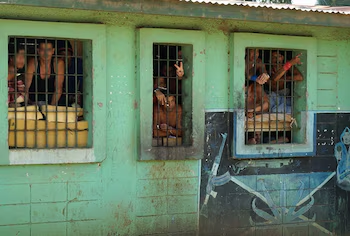
Preventive detention in Costa Rica has seen a staggering increase, doubling over the past five years. According to the 2025 Annual Labor Report from the National Mechanism for the Prevention of Torture, the number of individuals detained without a sentence surged from 2,564 in 2022 to 5,034 in 2026. Compounding this issue is the alarming 46.4% overcrowding in the prison system, where the total inmate population stands at 19,453, far exceeding the capacity of 13,289.
The Nature of Preventive Detention
Preventive detention serves a specific legal purpose; it is not a substitute for a sentence. Magistrate Patricia Vargas from the Criminal Cassation Chamber emphasizes that “preventive detention is not an anticipated sentence.” This measure aims to ensure that the accused do not escape, continue to commit crimes, or obstruct investigations. However, the practical application of this principle raises concerns.
Overcrowding and Its Implications
The report reveals a critical gap between the intended purpose of preventive detention and its practice. The current restrictions—on visits, food entry, and financial transactions—affect both convicted individuals and those awaiting trial. This means that those presumed innocent face conditions as harsh as those with final sentences.
CAI San José has become the most overcrowded facility, reaching an astonishing 134.3% saturation. Other facilities, such as CAI Marcus Garvey and CAI Antonio Bastida de Paz, are also facing severe overcrowding situations, with rates exceeding 100%.
Human Rights Concerns
The implications of overcrowding extend beyond mere numbers. The report warns that this situation severely impacts personal integrity and can lead to cruel and inhumane treatment. Conditions that fail to respect human dignity can jeopardize the rehabilitative purpose of the penal system, infringing upon the rights of those held on preventive detention.
Political Context and Strategies
The political backdrop of this grim reality is shaped significantly by President Laura Fernandez’s administration, which commenced on May 8, 2026. Influenced by the security strategy of Salvadoran President Nayib Bukele, her government is pushing for the construction of a massive prison capable of housing 5,100 inmates. This initiative reflects a broader trend focusing on punitive measures rather than rehabilitation.
Criticism of Current Policies
The National Mechanism for the Prevention of Torture has strongly criticized this direction, arguing that it prioritizes security over human dignity. Concerns have also been raised that high containment strategies may inadvertently bolster organized crime rather than diminish it. The absence of a comprehensive criminological policy that addresses the roots of crime only exacerbates this issue.
The Shift in Detention Policies
Another alarming trend is the collapse of the semi-institutional system, allowing inmates temporary release for work. This population decreased dramatically from 4,909 in 2016 to a mere 1,245 in 2026. Meanwhile, the closed centers’ population, where inmates remain confined 24/7, has jumped by 20% in just two years, favoring total containment over gradual reintegration.
Conclusion
With a national incarceration rate of 366 inmates per 100,000 residents, Costa Rica ranks 22nd globally according to the World Prison Brief. Addressing issues surrounding preventive detention and overcrowding is critical not only for upholding human rights but also for creating an effective and humane penal system that can contribute to social reintegration rather than merely punishment.