
## Controversial Remarks by Mariano Rajoy
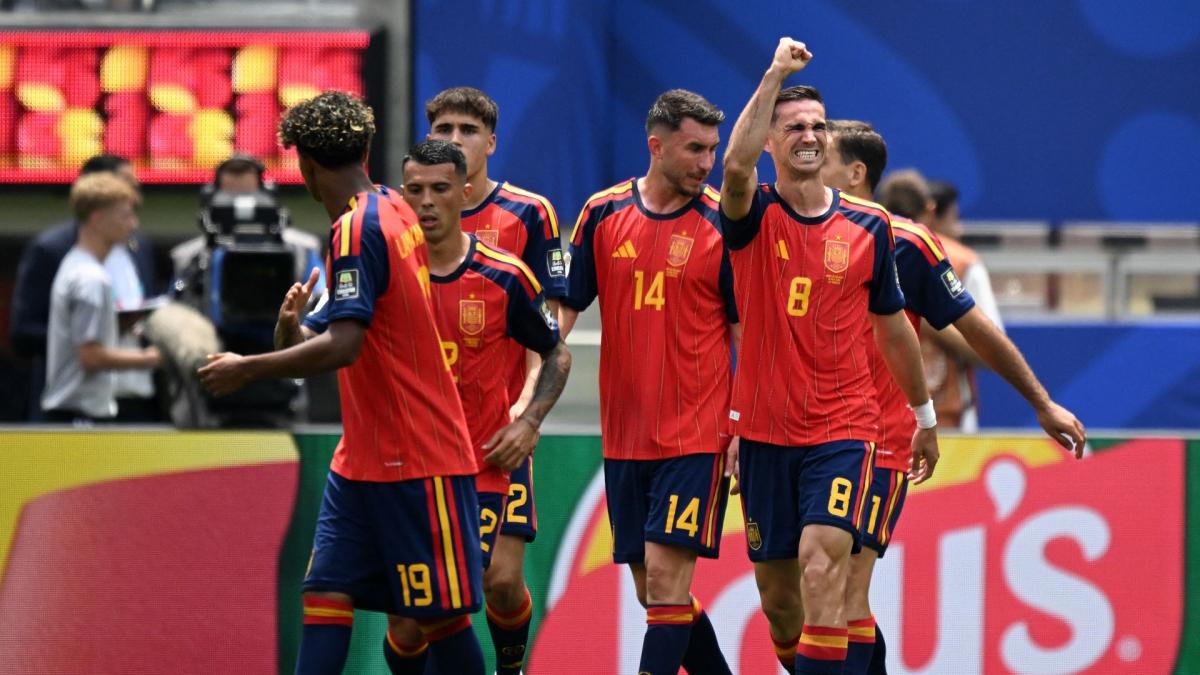
Recently, Mariano Rajoy’s comments regarding the French national football team, known affectionately as Les Bleus, generated significant backlash. As the semi-final match between Spain and France approached, Rajoy asserted that the French squad consisted of a team “without French.” This statement ignited a wave of outrage, especially among French political leaders and supporters, who labeled the remarks as discriminatory.
## Rafael Louzán Abal Supports Rajoy
In the midst of this controversy, Rafael Louzán Abal, the president of the Spanish Football Federation, stepped in to defend Rajoy. During a recent interview, he stated that Rajoy is a close friend and urged against intertwining sports with political matters. “What unites us the most is the national team. Let politics not divide it,” Louzán Abal remarked. His comments were intended to calm the situation and redirect the focus back to the sport rather than the surrounding political tension.
### Misinterpretations and Context
Louzán Abal further argued that Rajoy’s remarks might have been misinterpreted, suggesting that they were “perhaps taken out of context.” This defense aligns with a growing trend where individuals in positions of authority attempt to circumscribe controversial statements within a broader narrative of misunderstanding.
### Backlash from France
The reaction to Rajoy’s comments was immediate and widespread in France. Many political figures, including prominent leaders, highlighted that all players in the French team are indeed French. This highlights a broader issue of identity and representation in sports, especially in a multicultural society. The timing of the remarks, just before a crucial match, intensified the indignation and protests against Rajoy’s comments, drawing attention to the need for sensitivity and respect for diversity.
## The Role of Sports and Politics
This incident raises pertinent questions about the intersection of sports and politics. Athletes often find themselves at the crossroads of cultural, political, and social issues, which can complicate their public image and legacy. In this case, Louzán Abal’s insistence on separating the two spheres may reflect a desire to preserve the integrity of the game amid growing political tensions.
### Conclusion
As the World Cup fever escalates, the focus remains on the performances of each team rather than the distractions of political controversies. The football community must navigate these complex discussions while advocating for inclusivity and respect among players and supporters alike. With the significant implications of Rajoy’s remarks still resonating, it will be interesting to see how sports leaders like Louzán Abal continue to address these issues in the future, particularly in such a politically charged environment.