
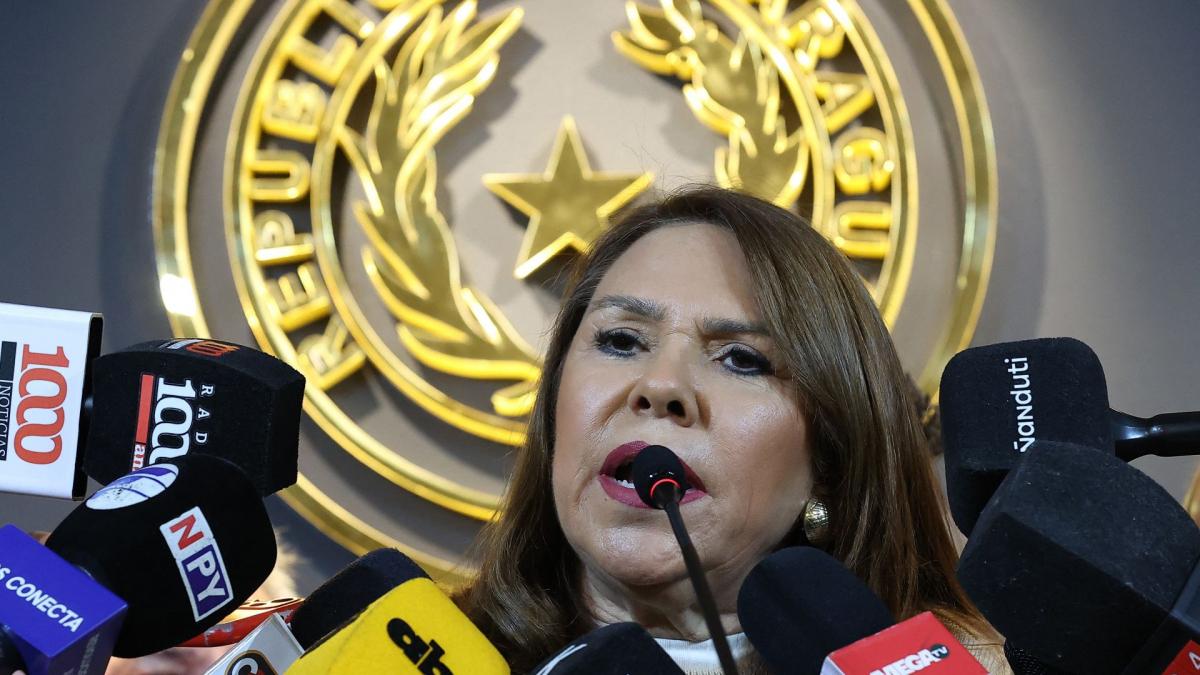
Celeste Amarilla’s Controversial Comments on Kylian Mbappé
Escalation of a Heated Situation
The spotlight has once again turned on Celeste Amarilla, a Paraguayan senator known for her inflammatory remarks. Following the French national team’s victory over Paraguay in the round of 16 at the World Cup, she initially sparked outrage with racist comments directed at Kylian Mbappé. However, her latest outburst—calling the renowned French striker a “son of a b *h”—has elevated tensions even further. This latest remark came during a session in the Paraguayan Senate and reflects her persistence in inciting controversy.
Amarilla accused Mbappé of disrespecting Orlando Gill, the Paraguayan goalkeeper. She recounted a moment where Gill extended his hand to shake Mbappé’s, but the French captain allegedly refused and shouted at him instead. Amarilla’s contemptuous statement implies that such behavior is uncharacteristic of a Frenchman, thereby suggesting that Mbappé’s actions do not embody the values of French culture.
Cultural Heritage vs. Individual Accountability
In a broader context, Amarilla further expressed her disdain for reducing French culture to an individual, claiming, “France is Jean-Jacques Rousseau, René Descartes, Montesquieu, Victor Hugo, Simone de Beauvoir, the Declaration of the Rights of Man and of the Citizen.” Her comments seem to assert that an athlete’s fame should not eclipse the rich tapestry of French intellectual and cultural contributions. This sentiment was echoed by another senator, Nano Galaverna, who labeled Mbappé as arrogant in homophobic terms, exacerbating the already charged atmosphere.
Impact on Franco-Paraguayan Relations
Amarilla’s remarks have threatened to strain diplomatic relations between France and Paraguay. While the Paraguayan government denounced her earlier racist statements, it remains unclear how her more recent insults will be addressed. The Paris Prosecutor’s Office has initiated an investigation into her comments for aggravated public insult and potential incitement to hatred or violence.
In response to Amarilla’s insults, Kylian Mbappé took to social media, labeling her comments as “despicable and unworthy of her office.” He emphasized his commitment to combating hatred and racism, stating, “I will never give people like her the freedom to spread their hatred and racism throughout the world.” His response underscores not only his integrity but also his sense of responsibility as a public figure.
Conclusion
Celeste Amarilla’s latest comments against Kylian Mbappé reveal much more than just individual prejudice—they highlight an ongoing cultural clash and the complexities of national identity in the age of global sports. As this saga unfolds, it raises significant questions about the responsibilities of public figures and the impact of their words on international relations and cultural perceptions. The world watches closely as this incident continues to develop, advocating for dialogue around racial discourse and national pride in the realm of sports.