
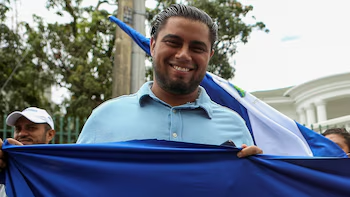
Costa Rica Begins Trial for Attack on Nicaraguan Dissident Joao Maldonado
Overview of the Case
This Monday, the judicial proceedings against Jeremy Jacob Rivas Núñez, a Costa Rican national, will commence in San José, Costa Rica. The case revolves around the attempted murder of Nicaraguan dissident Joao Maldonado and his wife, Nadia Robleto, who survived a brutal attack that left Maldonado with a shocking 13 gunshot wounds across two incidents.
Timeline of Events
The trial is expected to last five days and will center on determining Rivas Núñez’s criminal responsibility for the attacks. Maldonado, now 38 years old, faced two assassination attempts: the first on September 11, 2021, when he was shot five times in Escazú, and the second on January 10, 2024, when gunmen on motorcycles opened fire on him and Robleto while they were in their vehicle.
Allegations of Political Motives
The victims have made serious allegations against Nicaraguan co-presidents Daniel Ortega and Rosario Murillo, suggesting that they are complicit in these acts of violence. They also implicate the Nicaraguan Army’s political intelligence in orchestrating these attacks. Although the trial is against Rivas Núñez, many believe that the violence against Mejía is part of a larger pattern of transnational persecution led by the Sandinista government against its critics.
Virtual Testimonies
Maldonado, who currently resides in the United States under a refugee resettlement program coordinated by the United Nations High Commissioner for Refugees, is scheduled to testify virtually on Tuesday. His wife, Robleto, will provide her account the following day as she continues to recover from her injuries, which have left her in a wheelchair.
Demands for Comprehensive Justice
The central aim of the trial is to determine Rivas Núñez’s guilt, but both Maldonado and civil society organizations are pressing for a broader investigation into the people who orchestrated and planned the attacks. The Human Rights Collective for the Historical Memory of Nicaragua emphasizes the need for justice to extend beyond the immediate perpetrator to include anyone involved in the planning and execution of these attacks.
Call to Action
Maldonado expressed the urgency for Costa Rican authorities to delve deeper into the investigation, stating, “Impunity exposes much more to the exiled Nicaraguan population.” Advocacy groups are urging the Costa Rican Judiciary and Public Ministry to ensure an independent trial and maintain focus on the complete network involved in these violent acts. They are also calling on international organizations and human rights bodies to monitor the proceedings closely.
Conclusion
As this high-profile trial unfolds, it raises pressing questions about political accountability, justice for victims of violence, and the broader implications for Nicaraguan dissidents living abroad. With the backdrop of escalating tensions in the region, the attention given to this case could have far-reaching effects on both Costa Rica’s judicial system and the safety of other Nicaraguans facing persecution.