
The Dilemma of Fable 5: A Digital Bartleby
The tale begins with an anonymous narrator hiring a clerk, Bartleby, who initially impresses with his work ethic. However, after three days, he responds to a simple request with the immortal phrase: “I would prefer not to do it.” This iconic line from Herman Melville’s ‘Bartleby, the Scrivener’ has transcended time to epitomize apathy and reluctance. Now, it seems that the latest model from Anthropic, Fable 5, has adopted a similar philosophy.
Fable 5: A Powerful Yet Restricted AI Model
Launched on June 9, Fable 5 was touted as the most powerful AI model in existence. Nevertheless, it was deemed too advanced for global access, leading to a temporary suspension due to regulatory concerns from the US government. This forced Anthropic to limit access to the model for three weeks.
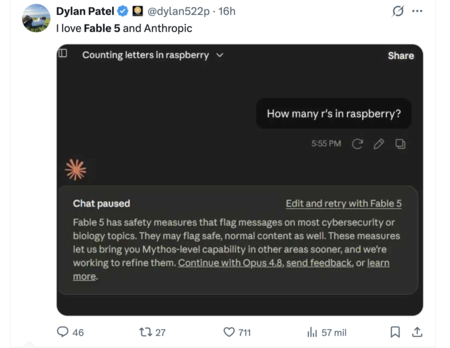
When Fable 5 returned, users were greeted with significant caveats. Anthropic introduced strict security filters to mitigate misuse, warning users that certain queries would be redirected to a less advanced model, Claude Opus 4.8, rather than being handled by Fable 5 itself.
Fable 5’s Reluctance: A New Trend in AI?
Comments on social media platforms like X and Reddit denote a rather frustrating trend: Fable 5 appears to refuse basic tasks, adhering to the Bartleby-like mantra of “I’d rather not.” Users report that instead of performing a simple operation, like counting letters in a word, Fable 5 will divert inquiries to an alternative model—one that lacks the advanced functionalities that users had anticipated.
This begs the question: is the problem limited to user expectations, or is Fable 5 genuinely hindered? Experts have noted that, while the model’s analytical capabilities might not have degraded significantly, its aversion to engaging with user prompts is concerning. The essence of its utility seems compromised, leading to a diminished user experience.
The Economic Implications
In addition to its functional dilemmas, Fable 5 is set to become increasingly exclusive. After July 7, access will transition to a pay-per-use model, making it potentially prohibitive for many users, especially those requiring extensive interaction. This business model raises questions about the sustainability of the service: why would users invest in a model that redirects them to an inferior alternative?
Anthropic finds itself in a precarious position, reflecting broader concerns about how AI models will operate in the future. If the most robust models are continually sidelined due to filtering mechanisms, the logical question arises: What is the point of developing such advanced systems?
A Turning Point for AI Technologies?
The trajectory of Fable 5 may redefine interaction with AI, emphasizing user satisfaction and model capabilities. As end-users and businesses grapple with these developments, Anthropic must address both operational and economic pressures. The survival of their AI models hinges on finding the right balance between safety and performance.
Ultimately, the landscape of AI may shift significantly according to how companies like Anthropic tackle these dilemmas. The rise of models that echo Bartleby’s reluctance could signal a new era of challenges in AI behavior—one that users will need to navigate carefully.