
Changes in EU Customs Regulations: What to Expect When Shopping Online
As of July 1, 2026, the European Union has implemented new customs regulations affecting certain shipments valued up to 150 euros from outside its borders. This change has stirred discussions about its objectives and implications on various e-commerce platforms. A burning question remains: how much will consumers ultimately pay?
Understanding Product Labels
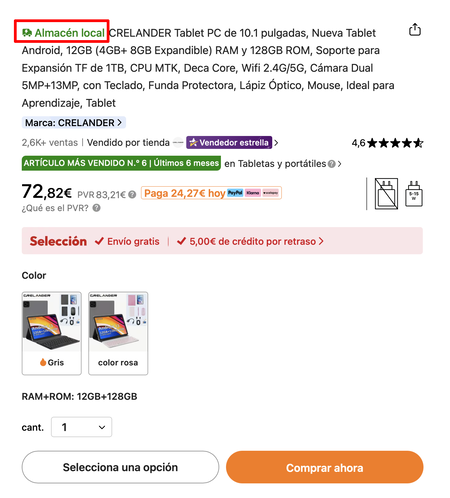
To navigate this new landscape, I explored products on popular platforms like Temu, AliExpress, Amazon, and SHEIN, focusing on items likely to be shipped from non-EU countries. One of the first insights came from the labels used by these platforms. On Temu, for instance, products marked as “Sent from Spain” have a different meaning than those tagged as “Local warehouse.”
- Sent from Spain: This label indicates that, historically, the item has been sent from Spain for the past three months.
- Local Warehouse: This label suggests the product may arrive sooner but doesn’t guarantee it will ship from Spain.
Fees Before Payment
As I added items to my cart, the first notice of potential additional charges appeared on the product page, warning that “additional customs-related fees will apply.” However, the specific amount wasn’t revealed until the final payment step.
Temu’s Fee Breakdown
In my Temu trials, the customs clearance service fee was revealed just before finalizing the order—this amounted to 3 euros plus VAT.
AliExpress vs. Temu
AliExpress followed a different approach. Instead of labeling it as a “Customs Clearance Service Fee,” they provided an “Estimation of Customs Charges” totaling 3.63 euros, categorizing it as an estimate of taxes and duties applicable before concluding the purchase.
Amazon’s Unique Approach
Unlike the other platforms, I didn’t find any additional fees for Amazon items during my tests. After reaching out for clarification, an Amazon spokesperson noted that most of their items are shipped from within the EU and are not subject to the new customs fee, except for a small percentage of cross-border items, which would incur the 3 euros fee.
SHEIN: No Additional Charges Shown
My experience with SHEIN was different. I selected a product from a Chinese seller, and the total at checkout remained unchanged. The platform affirmed that the final price included all applicable import taxes without any separate line item showing additional costs.
Key Takeaways on the New EU Rate
The new rate applies exclusively to low-value shipments, with the fees calculated based on item classification rather than quantity. For example, five t-shirts incur a single fee of 3 euros, whereas different classifications—like a t-shirt and a watch—each attract their own fee, totaling 6 euros.
It’s important to note that prices on platforms like Temu and AliExpress reflected VAT, raising the overall customs fee. When I combined items of different classifications, the total also increased, demonstrating how costs can accumulate based on product type.
Who Bears the Costs?
The regulations introduce a new requirement for certain low-value shipments but do not stipulate who should bear the financial burden. Each platform has the discretion to absorb these costs or pass them on to the consumer. During my tests, Temu and AliExpress added the charges to the final price, whereas SHEIN appeared to absorb the costs into the final amount.
Conclusion
The implementation of the new customs regulations is still fresh, and platforms may adapt their processes as time goes on. As I continued to monitor these online shopping experiences, I also reached out to Temu, AliExpress, and SHEIN for their comments, but they had not responded by the time of this writing. Given the evolving nature of e-commerce regulations, consumers should stay informed about how these changes might affect their purchasing decisions in the near future.