
The Unexpected Treasure of Senon: A Glimpse into Roman History
Archaeologists recently made a fascinating discovery in the small town of Senon, located in the Meuse department of northeastern France. Known for its quaint demeanor today, Senon once served as a significant settlement for the Mediomatrici, a Celtic tribe in ancient Gaul. The recent excavation unearthed a cache of Roman coins, which consists of an astonishing 40,000 coins hidden in large ceramic amphorae.
A Chance Discovery
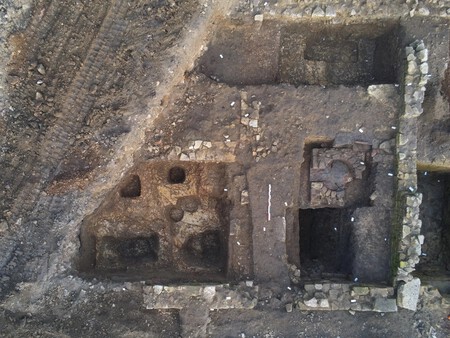
The unearthing of these coins was largely serendipitous. During expansion work on residential properties in Senon, archaeologists stumbled upon layers of history dating back to the Gallic period and extending to the mid-4th century AD. Institut National de Recherches Archéologiques Préventives (INRAP) reported that this site contained remnants of ancient homes, roads, and even structural layouts indicative of a well-off, possibly artisan or merchant society.
Three Amphorae, Thousands of Coins
In the course of their excavation, researchers discovered three large amphorae containing coins minted between the late 3rd century and the early 4th century AD. Two amphorae were uncovered by INRAP, while the third emerged during separate regional archaeological efforts. The total weight of these treasures is remarkable: the first jar alone holds around 23,000-24,000 coins weighing approximately 38 kg, while the second amphora, with a broken neck, contains between 18,000 and 19,000 coins that amount to a total of 50 kg. The third jar holds only three pieces, suggesting its lesser significance.
Understanding Their Context
The importance of this discovery goes beyond the sheer number of coins. According to archaeologists, these amphorae likely represent a type of household bank rather than hidden treasures meant to evade capture. They were buried in a manner that made them easily accessible, suggesting that this was a system of regular deposits and withdrawals.
Practical Banking of Antiquity
“These deposits should be considered as a snapshot of complex monetary management,” noted experts from INRAP. The way the coins were stored indicates that they were not hastily concealed. Instead, the jars were carefully placed in prepared pits, emphasizing intentionality and accessibility for everyday use.
The Mystery of Abandonment
Perhaps the most intriguing aspect of this find is why the coins were seemingly abandoned. Speculation arises around possible connections to a military fortification located just 150 meters from the excavation site. This prompts questions: Was the buried treasure meant for military expenses? Or was it left behind due to unforeseen events, such as the fire that swept through the region in the early 4th century?
Future Research Avenues
As archaeologists continue to analyze the coins and their historical context, this discovery in Senon creates a unique opportunity to explore not only the Roman economy but also the everyday life of ancient communities. The findings may significantly contribute to our understanding of how ancient Gallic societies managed and interacted with currency.
This monumental discovery serves as a reminder that while archaeological work may not mirror Hollywood depictions, the reality can indeed be equally thrilling and enlightening.