
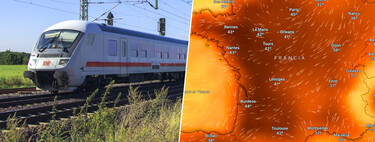
The Impact of Europe’s Recent Heat Wave
Europe has recently faced a staggering heat wave, with shocking consequences. France reported over 1,000 deaths resulting from extreme temperatures, compelling residents to adapt in unusual ways, such as using thermal blankets to deflect sunlight and cool their homes. These drastic measures underscore the urgent need for improved infrastructure in the face of climate change.
Infrastructure Under Stress
The ramifications of this heat wave have extended beyond human health. Europe is witnessing roads melting and tram systems struggling under excessive heat, prompting firefighters to spray bridges to prevent steel fractures. With train cancellations on the rise due to insufferable temperatures, the urgent need for resilient infrastructure has never been clearer.
Spain’s Experience and Challenges
Spain, while not immune to these atmospheric shifts, possesses some advantages due to its historical experience with extreme heat. Other Southern European countries, like Portugal and Italy, are increasingly turning to Spain as a model for constructing resilient infrastructure. However, this is not to overlook Spain’s vulnerabilities. César Franco, president of the General Council of Industrial Engineers, warns that Spain shares the same resilience challenges as the rest of Europe.
Redefining Engineering Standards
Contrary to social media debate, assertions that Spain lacks essential infrastructure components, such as expansion joints, are inaccurate. “Joints are crucial in bridges and structures across Europe,” Franco states. The discrepancies in infrastructure design are not due to ignorance but rather to an emphasis on different climate conditions; northern Europe prioritized cold weather adaptability, while Spain has focused on heat resistance.
Concurrent Risks in Spain
As Spain navigates extreme temperatures, it also grapples with heavy rainfall and flooding. Franco emphasizes that current engineering methods must address the “concurrent risk” of climate events. This means considering not only heat but also torrential rain, storms, and other geotechnical challenges.
The Need for Preventive Measures
Despite Spain’s experience with high temperatures, the General Council of Industrial Engineers highlights concerns about aging infrastructure. Preventive conservation measures need to be intensified to prepare for worsening climate conditions, and rapid adaptation of existing networks is essential. Franco points out that while Spain has robust regulations in place for high temperature scenarios, the looming question is whether we can adapt quickly enough.
A European Challenge
Ultimately, Spain is not alone in facing these challenges. Both Spain and the larger European Union must seek to adapt their infrastructure for unpredictable weather patterns. Franco reminds us that the EU mandates that key networks must be resilient against natural risks by 2030, 2040, and 2050. However, the pace of adaptation raises concerns about whether we will meet these deadlines.
Photo credits: Julian Hochgesang and General Council of Industrial Engineers