
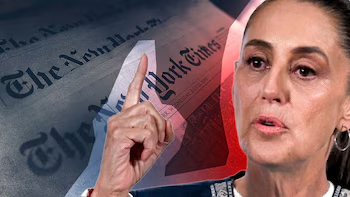
Sheinbaum Questions The New York Times: An Inquiry Into Journalistic Ethics
Background of the Controversy
Claudia Sheinbaum, the President of Mexico, has recently called into question the credibility of a report published by The New York Times. This report suggests that several officials from the political party Morena have been cooperating with U.S. authorities. Sheinbaum’s challenge to the report reflects deeper concerns regarding journalistic integrity and the nature of unnamed sources.
The Source of Discontent
In her remarks, Sheinbaum expressed incredulity over the reporting standards of a publication she labeled as one of the world’s best newspapers. “How can there be a note if in a newspaper that claims to be one of the best in the world, a source, who knows who, told me that there are people from Morena informing the United States?” she asked. This statement underscores her frustration with the lack of transparency surrounding the unnamed source of such serious allegations.
Government’s Position on Cooperation Claims
Sheinbaum clarified that the federal government has no concrete information indicating that any officials are colluding with U.S. authorities or the Department of Justice. “What information? So, how are we going to give our opinion on something that we have no knowledge of?” she questioned, emphasizing that speculation lacks substantiation.
Letters and Legal Reactions
Adding to the controversy is a letter from Alfonso Durazo, the Governor of Sonora, who has formally demanded a retraction from The New York Times. Durazo has pointed out discrepancies in the report, reinforcing Sheinbaum’s skepticism about its validity. The letter serves as an additional layer of doubt about the journalistic process behind the piece.
The Allegations of Division within Morena
The New York Times report insinuates that a divide exists within the Morena party regarding the nature of U.S. investigations. Some officials reportedly seek to cooperate with U.S. authorities to preemptively address concerns about potential investigations into their activities related to organized crime. While Sheinbaum expresses skepticism over this claim, it underscores the internal tensions within her administration, indicating a potential split between those who favor cooperation and those who view U.S. involvement as interference.
Final Thoughts on Journalistic Integrity
Claudia Sheinbaum’s critique of The New York Times raises significant questions about the ethical responsibilities of journalism, especially when anonymous sources are involved. The resulting international scrutiny highlights a growing need for transparency in reporting, particularly when claims could have serious implications for political figures and the trust citizens place in media organizations.
In the broader landscape, such tensions exemplify the complexities of modern journalism, where the balance between protecting sources and ensuring factual accuracy can dictate public perception and political stability. As the world continues to navigate issues of legality, morality, and governance, the stakes in journalistic integrity have never been higher.