
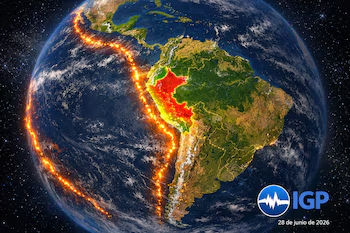
The Geophysical Institute of Peru (IGP) has reported multiple earthquakes across various regions, a reminder of the country’s geological volatility. The most significant tremors were recorded on June 26 and 27, with magnitudes ranging from mild to moderate. Fortunately, these occurrences resulted in no reported damages.
Recent Earthquakes
On June 28, 2026, the IGP noted several noteworthy seismic events:
Earthquake in Puerto Inca: Magnitude 3.5
A 3.5 magnitude earthquake struck at 15:12:08, located 16 kilometers south of Puerto Inca, Huánuco. This tremor occurred at a depth of 21 kilometers and was felt with an intensity of II-III.
Earthquake in Calango: Magnitude 3.4
At 07:02:39, a magnitude 3.4 quake hit Calango, near Cañete, Lima, at a depth of 53 kilometers. The event had a similar intensity rating of II-III.
Earthquake in Mala: Magnitude 3.5
Another tremor of 3.5 magnitude was recorded at 06:33:26, located 19 kilometers west of Mala in Cañete, with a depth of 49 kilometers.
Earthquake in Pucallpa: Magnitude 3.5
Earlier in the morning, at 04:05:48, a magnitude 3.5 earthquake shook 24 kilometers northeast of Pucallpa, Ucayali, at a depth of 20 kilometers.
Earthquake in Sechura, Piura: Magnitude 3.9
The IGP recorded a magnitude 3.9 earthquake at 02:14 a.m. near Sechura, at a depth of 15 kilometers, registering an intensity of III.
Seismic Monitoring in Peru
The IGP continues to maintain comprehensive monitoring of seismic activity. As of today, a total of 379 earthquakes have been documented in 2026. Peru’s seismic backdrop is largely due to the subduction of the Nazca Plate beneath the South American Plate, creating a dynamic geophysical environment.
Hernando Tavera, the IGP president, warns of a potential significant earthquake in the Lima region. He estimates the likelihood of a quake reaching at least magnitude 8.8, emphasizing the importance of preparedness.
Recommendations for Earthquake Preparedness
In light of recent seismic activity, the IGP and the National Institute of Civil Defense (INDECI) recommend several preparedness measures:
- Remain calm and identify a safe area in your home or workplace.
- Avoid windows, mirrors, and other hazardous materials.
- Protect your head and neck with your arms or sturdy objects.
- Wait until shaking stops to exit to safety.
- Check for any damage and inform authorities about risks.
Essential Emergency Backpack Contents
Authorities recommend preparing an emergency backpack containing:
- Water for three days
- Non-perishable food items
- Flashlight, radio, and batteries
- First aid supplies
- Important personal documents
- Warm clothes and blankets
- Sanitization materials, such as masks
- A whistle for emergencies
Importance of Participation in Drills
Active participation in earthquake drills is crucial for fostering a culture of preparedness. Engaging in these drills helps individuals to:
- Learn evacuation routes and safety measures.
- Identify potential risks in various environments.
- Coordinate emergency plans with family and coworkers.
- Reduce reaction time in crises.
- Correct any errors in emergency strategies.
As Peru continues to experience seismic activity, staying informed and prepared is paramount for all residents.