
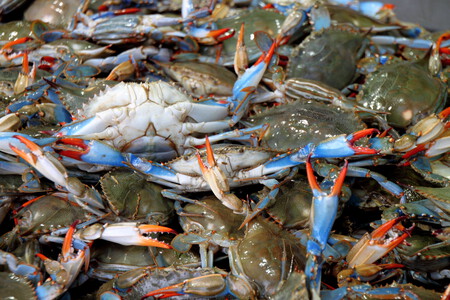
The blue crab (Callinectes sapidus) has been a formidable presence on the Italian coasts, causing significant disruptions to local clam and mussel production. Originating from the western Atlantic and Gulf of Mexico, this invasive species is proving to be a serious threat to Italy’s culinary heritage and the livelihoods of many fishermen, estimated to have caused losses reaching 100 million euros annually.
The Pincered Predator: Blue Crab’s Impact
Characterized by its striking blue color and powerful pincers, the blue crab is not just an avaricious predator but a relentless one. It feasts on clams, mussels, fish eggs, and even other crabs with more fragile shells. Introduced in Italy around 1940, its numbers are now soaring to unsustainable levels, severely impacting traditional fishing practices and food sources.
A Desolate Future for Fishing?
“The blue crabs are eating everything. This stretch of lagoon is turning into a desert,” lamented Gianluca Travaglia, a clam fisherman from the Po Delta. The dire state of the marine ecosystem is underlined by the fact that approximately 90% of young clams are being obliterated by these invasive crabs.
Searching for Solutions
In response to this crisis, both fishermen and governmental authorities are scrambling for solutions. Various tactics, including the use of nets that are five feet high above the water, have failed as crabs continue to outsmart the defenses. As a result, extensive campaigns to capture the blue crabs have begun, supported by significant investments in fighting the invasion.
Adapting Culinary Traditions
Some restaurants are experimenting with ways to incorporate blue crabs into local dishes, exploring new markets in the US and China. However, scientists caution against viewing this as a long-term solution due to potential environmental repercussions linked to promoting invasive species within local cuisines.
Turning to Oysters: A Viable Alternative
One promising avenue is the cultivation of oysters, which have shown resilience against blue crab attacks. As highlighted by Il Sole 24 Ore, there is a strategic shift underway where fisheries are diversifying from clams to oyster varieties better equipped to withstand this invasion. Fishermen’s cooperatives in the Sacca di Goro lagoon are already reaping the benefits through targeted investments and research initiatives on enhancing oyster production.
More Resistant Varieties
Roberto Savini of Confcooperative Romagna-Estense indicates that significant investments are being funneled into cultivating more resistant oyster varieties like Mignon and Lampa. Such efforts not only help counter the menace of the blue crab but also create new economic opportunities for fishermen.
Will Oysters Save the Day?
The transition to oyster farming does not come without challenges, particularly concerning market perceptions. Many still view oysters as a luxury item, which has led the Italian government to propose measures like reducing VAT rates on oyster sales to make them more accessible. Currently, Italy only produces around 3% of its oyster consumption, with the majority imported from abroad.
Nonetheless, if Italy can successfully pivot to oyster cultivation and mitigate the impact of the blue crab, it may set a precedent for neighboring countries, such as Spain, that are also grappling with this invasion. The lessons learned could help shape a more sustainable future for Mediterranean fisheries.