
## Rade Bogdanovic’s Controversial Remarks: A Racist Outburst in Sports Commentary
Former Yugoslav international footballer Rade Bogdanovic has sparked a massive controversy with his recent comments on Serbian public television channel RTS. After reflecting on a high-stakes match, Bogdanovic’s remarks about black players not having “the concentration to last more than 60 to 80 minutes” have been met with widespread backlash. As a consultant on sports television, such comments carry significant weight, influencing public sentiment and discourse regarding race and sports.
### Context of the Controversy
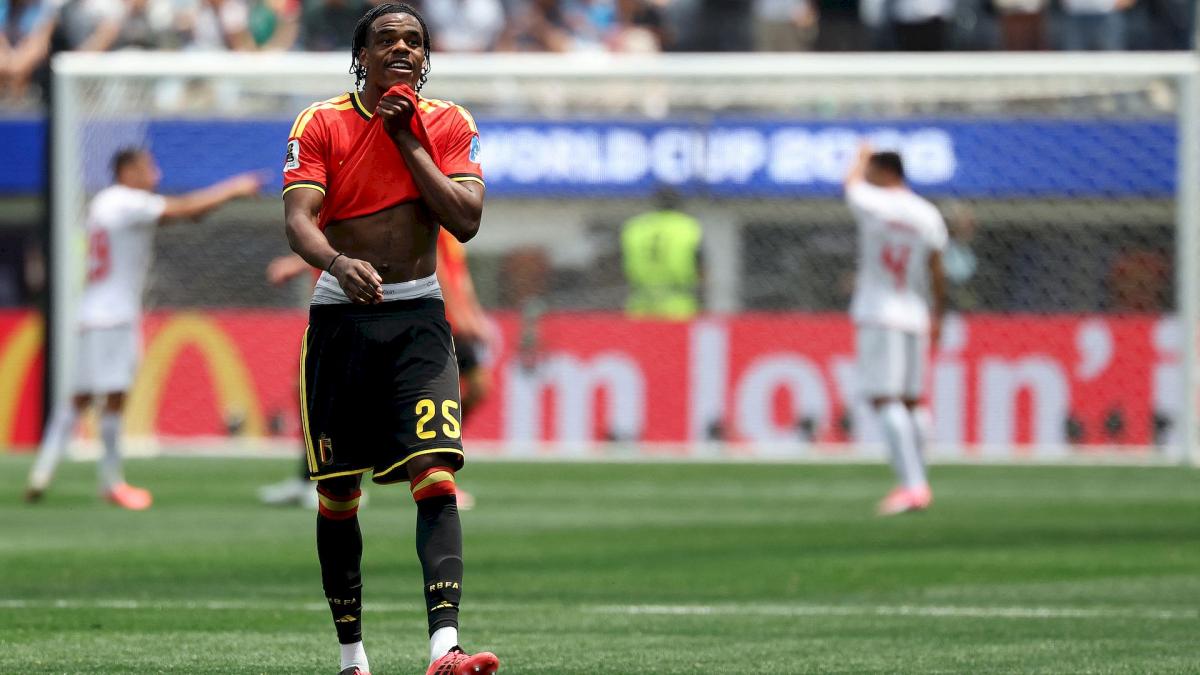
The incident arose during a discussion about Nathan Ngoy, a Belgian player who received a red card for his actions in the 66th minute of a game against Iran. Bogdanovic’s commentary not only appeared to target Ngoy’s performance but also extrapolated this to a broader stereotype about black athletes. His statement, “I’m not racist, but,” serves as a classic example of a harmful pattern, often used as a preamble to racist or biased commentary.
### Ignoring Accountability
Instead of retracting his statement or offering an apology, Bogdanovic defended his remarks, asserting, “If we wanted to go into detail, we could. They also make mistakes. I’m obviously not generalizing, but the majority lack concentration and then this kind of situation occurs.” This response only fueled the outrage, as it suggests a refusal to engage with the broader implications of his words. His comments not only undermine the individual capabilities of athletes but also proliferate harmful stereotypes that impact narratives around race in sports.
### Reactions From the Public and Experts
Bogdanovic’s statements have not been taken lightly. A wave of criticism has emerged from players, analysts, and fans alike who find such generalizations damaging to the integrity of sports commentary. Many argue that statements like Bogdanovic’s contribute to systemic racism within the sporting community, where athletes of color already face disproportionate scrutiny and stereotypes.
Various sports analysts have highlighted that concentrating on race and attributing performance issues to ethnicity serves to distract from individual skills and hard work. Such remarks not only devalue the contributions of talented athletes but also perpetuate an environment where players may feel they must continually prove themselves against unfounded biases.
### The Importance of Responsible Commentary in Sports
As sports commentators wield significant influence, it is essential for them to recognize the weight of their words. Rade Bogdanovic’s statements serve as a reminder of the responsibility that comes with media presence. By generalizing and perpetuating stereotypes, commentators can inadvertently reinforce negative perceptions that affect not just the individual but the broader athlete community.
In a world increasingly aware of issues surrounding race and equality, it is crucial for all in the sports industry—players, commentators, and fans alike—to nurture an environment of respect and understanding. Only by challenging such problematic narratives can the sports community hope to advance towards a more inclusive future.
### Conclusion
Rade Bogdanovic’s recent racist remarks have triggered a significant discussion about race, performance, and the responsibilities of sports commentators. As public figures, commentators must be cautious of the messages they send and the stereotypes they propagate. It is through dialogue, accountability, and responsible commentary that we can strive towards a more equitable sporting landscape for all athletes, regardless of their background.