
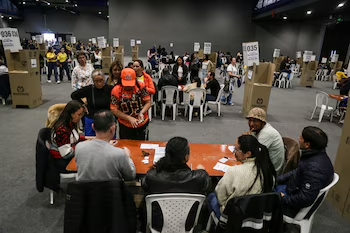
The candidate of the Historical Pact won the Colombian capital with 52.7% in the pre-count, which is 2.2 million votes over Abelardo de la Espriella’s 45.37%
On June 21, 2026, Bogotá hosted a significant presidential election, with over 6 million citizens eligible to vote. Polling stations were distributed throughout the city, open from 8:00 AM to 4:00 PM. In this tense political atmosphere, candidate Iván Cepeda, representing the Historical Pact, garnered a remarkable 52.7% of the votes in the capital, significantly outperforming Abelardo de la Espriella, who received 45.37%.
Allegations of Irregularities and Tensions Emerge
As the electoral process unfolded, President Gustavo Petro raised alarms about alleged irregularities at the Corferias facility, where the vote count was taking place. He emphasized that “only the judges determine who is the president of Colombia,” indicating serious concerns over the integrity of the election scrutiny process. This statement provoked a wave of reactions across the political spectrum, amplifying existing tensions.
Public Reaction and Protests in Bogotá
Following the announcement of Abelardo de la Espriella’s victory, the streets of Bogotá erupted in protests. Citizens rallied—some in celebration, others in defiance against the election results. The chaotic atmosphere contributed to significant disruptions in transportation, especially with the Transmilenio system, which suspended several services due to the ongoing demonstrations. This public outpouring reflects the deep ideological divides in Colombian society, underscored by stark regional voting patterns.
Call for Unity from City Leadership
Mayor Carlos Galán responded to the unrest by appealing for calm and unity among citizens. He urged them to channel their energy towards constructive actions, stating, “Tomorrow we all go out to work to have a better country, a fairer and more prosperous Colombia.” Galán’s message was aimed at fostering stability in a divided city as the political landscape continues to evolve.
Election Results and National Implications
Even with Cepeda’s win in Bogotá, the national results indicated a narrow victory for Abelardo de la Espriella, who claimed the presidency with a marginal lead across the overall vote count. The disparity in the election results highlighted the profound divisions within Colombia, suggesting a challenging path ahead for the upcoming administration as it navigates complex social, political, and economic issues.
Vote Tallies Overview
As the dust settles, preliminary results show that Iván Cepeda received approximately 12,694,863 votes, while Abelardo de la Espriella received 12,941,992 votes. This points to a deeply contested electoral landscape where both candidates reflected substantial support from various voter demographics.
The aftermath of this election will undoubtedly shape Colombia’s future, as leaders and citizens alike grapple with the implications of the results and seek pathways to unify a polarized nation.