
When thinking about the residential market, escalating prices and housing affordability, more and more cities are looking up. The idea is very simple: build taller buildings and make more use of limited land, especially in the most sought-after neighborhoods. This philosophy is taking hold, for example, in the Basque Country, where new apartments are proposed on existing buildings, or in Madrid, which aims to expedite procedures. In Vancouver, Canada, they have decided to go one step further by creating a kind of ‘XL laboratory’ to answer a key question:
Would the residential crisis be alleviated if we reduced bureaucracy and increased flexibility in buildability?
An Impossible Market
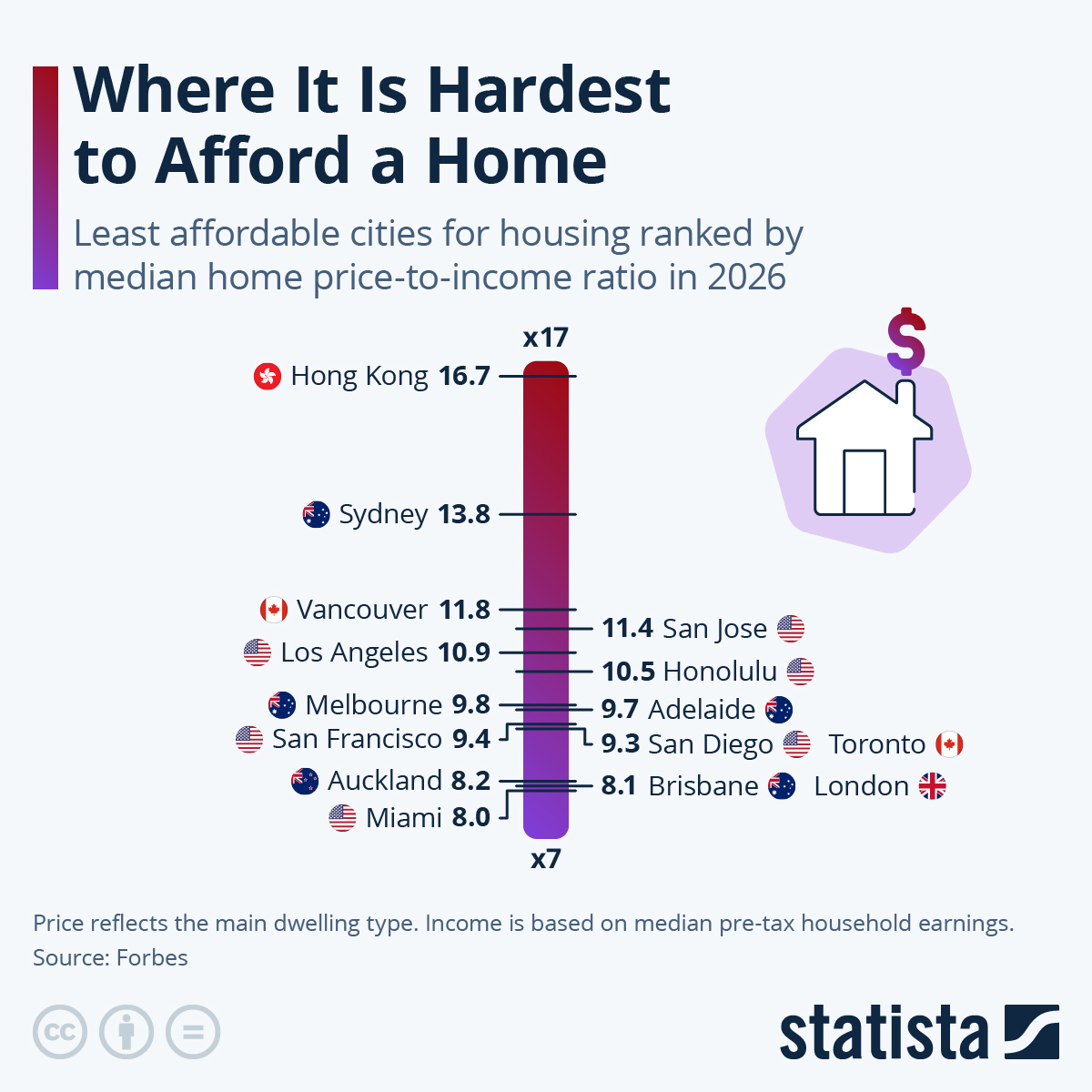
Living in Vancouver is not easy, particularly for those without a generous salary seeking to find a well-located and comfortable home. A study by Frontier Center shows that this British Columbia city ranks as one of the least affordable housing markets worldwide. Canadian families looking to purchase a property must invest, on average, the equivalent of 10.8 years of gross income just for a ‘normal’ cost house.
This statistic places Vancouver behind only Hong Kong, Sydney, San Jose, and Adelaide. The situation is substantially worse than in cities like Los Angeles, San Francisco, and New York. The rental market is also challenging; Zillow Rentals reports that average income in Vancouver hovers around $2,900, with last year’s figures slightly above $3,000. In response, government authorities aim to introduce 83,000 new homes into the market over the coming years.
Understanding the Crisis
What underlies this burgeoning crisis? According to a recent column in The New York Times by Binyamin Appelbaum, a significant factor is excessive bureaucratic rigidity and regulatory bottlenecks—not a problem unique to Canada.
“Cities have largely lost the power to approve projects. In preventing officials from acting against public interest, we have removed their ability to act in favor of it,” laments Appelbaum. “We have become so committed to justice that we’ve lost sight of the injustice of inaction.”
Restoring Affordability
Appelbaum highlights historical construction limitations imposed in cities like Vancouver since the 1960s, the repercussions of the 2008 financial crisis, and a growing housing deficit. As of 2023, Canada needs an estimated 3.5 million extra homes by 2031 to restore affordability, along with ongoing rental market tensions.
Geographic Limitations
Vancouver’s geographical constraints also exacerbate the housing issue. Its positioning—cradled by mountains to the north, the Pacific Ocean to the west, and the U.S. border to the south—limits expansion, compounded by urban planning that favors small properties over high-density alternatives.
Skyrocketing Prices
The central aspect of Vancouver’s housing crisis lies in its overwhelming number of single-family homes. While the city possesses an impressive skyline, the bulk of land is dominated by houses surrounded by grass, creating inefficiencies in land use.
Experts like Alex Hemingway, senior economist at BC Policy Solutions, criticize this land use in a city where residential square meters are skyrocketing, contributing to ballooning rents. Appelbaum notes troubling instances where apartment towers have made way for luxurious mansions, further limiting housing stock.
The Senakw Project: A Laboratory for Change
Amid this housing dilemma, Vancouver has initiated a groundbreaking project: Senakw. Situated near English Bay on a prime 10.48 acres, the goal is to build one of Canada’s most densely populated residential neighborhoods, with about 6,000 homes across 11 towers.
Senakw is not merely an innovative proposal; it represents tangible change. The first building includes 1,049 homes in three towers, with heights reaching up to 40 floors. The first tenants are slated to move in soon, with subsequent phases set to complete by 2027.
How Is It Possible?
The uniqueness of Senakw lies in its special status, exempting it from the strict regulations that limit density in other Canadian neighborhoods. Governed by the Squamish Nation, the 4.4 hectares of land are not subject to Vancouver municipal authority, offering a unique opportunity to construct without the usual bureaucratic hurdles.
A Legacy of Opportunity
Following a decades-long legal saga for the return of ancestral lands, in 2019, the Squamish Nation approved the residential project, envisioning a legacy for future generations. The overarching goal is to build not only homes but also community-oriented spaces, cultural hubs, and areas designated for Native art and products.
The Future Remains Uncertain
While the Senakw project marks a hopeful turn in Vancouver’s housing landscape, questions remain. Will the residential offerings meet demand? How will increased population density impact public services such as schools, parks, and healthcare facilities? Ultimately, can Vancouver’s innovative approach to housing provide a blueprint for cities grappling with similar crises?