
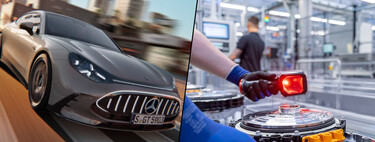
We’ve been hearing the industry buzz about solid-state batteries for years. These promise more autonomy, faster charging, and greater safety than current liquid electrolyte batteries. However, everything indicates that we still have a long way to go until we see them in commercial vehicles. Robin Zeng, the president of CATL, has stated in an interview with the Chinese magazine Caijing that solid-state batteries are unlikely to be viable before 2030, and even when they do arrive, they may not be accessible to the average buyer.
Challenges in Readiness
Zeng emphasized that, for mass production of solid-state batteries to be economically viable, the industry would need to manufacture at least one million vehicles using them. This volume does not appear achievable before 2030. Furthermore, he indicated that any available batteries would likely target the premium vehicle market first rather than the mass market.
Technical Issues
According to reports, CATL’s solid-state technology currently sits at level four on a nine-point technology maturity scale, primarily remaining in laboratory and prototyping phases. One significant hurdle is the solid-solid interface, which requires hot isostatic pressing at 6,000 atmospheres of pressure. This process leads to misalignment of materials with different densities, resulting in internal resistance and accelerated degradation of the cells.
The Current State of Battery Technology
With solid batteries still in development, CATL continues to innovate within conventional liquid electrolyte chemistry. As of May, CATL’s installed capacity reached 33.08 GWh, up from 29.06 GWh in April. The majority of this capacity comes from lithium-ferrophosphate (LFP) batteries and ternary lithium batteries, which remain the backbone of the current electric vehicle market.
Cost Barriers
Moreover, CATL has acknowledged that solid-state sulfur cells cost three to five times more than traditional lithium-ion cells. The development of sulfur electrolyte technology alone is projected to require an investment of approximately 10 billion yuan (about 1.27 billion euros).
Alternative Solutions in Development
While pure solid-state batteries are far from being ready for market, several Chinese manufacturers are exploring intermediate technologies. One noteworthy effort comes from Dongfeng Motor, which plans to produce an oxide-polymer composition battery with an impressive energy density of 350 Wh/kg and potential ranges exceeding 1,000 kilometers. This hybrid approach reduces the overall battery pack weight by 30% compared to conventional solutions and demonstrates improved cold performance, maintaining over 74% of nominal capacity even at temperatures as low as -30°C.
Advancements in Non-Automotive Sectors
Outside the automotive sector, progress is being made more rapidly in niche markets where cost is less of a factor. For example, the drone manufacturer Ehang recently completed an unmanned flight using a solid-state lithium-metal battery, showcasing the technology’s potential effectiveness in applications beyond consumer vehicles.
Collaborative Efforts in China
China is not solely relying on individual companies to advance solid-state battery technology. Since January 2024, the nation has been hosting the China All-Solid-State Battery Collaborative Innovation Platform (CASIP), a governmental initiative aimed at developing competitive solid batteries and establishing a supply chain before 2030. This effort unites various battery manufacturers like CATL, BYD, and Gotion, among others, indicating a concerted push for innovation within the sector.
As solid-state batteries continue to evolve, the road to commercial viability remains long and fraught with challenges. Until then, the industry will explore other promising technologies and maintain a focus on existing lithium-ion solutions.