
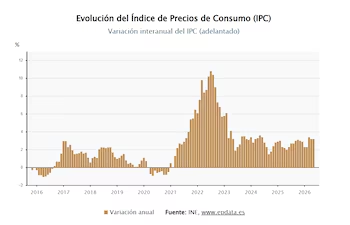
CPI Stabilization at 3.2% Amid Energy Price Fluctuations
The Consumer Price Index (CPI) in Spain recorded a stable year-on-year rate of 3.2% for May, marking the third consecutive month of inflation above 3%. This data, released by the National Institute of Statistics (INE), reflects ongoing economic challenges fueled by geopolitical tensions, notably the war in Iran.
Understanding Current Inflation Trends
The inflation rate in Spain has settled at 3.2%, a figure that aligns with preliminary estimates released in late April. The rise in core inflation—a metric that excludes volatile sectors like energy and fresh food—has been adjusted to 3%, up two-tenths from April. The persistent inflation is increasingly worrisome despite some declines in energy costs, such as a 5.5% drop in electricity prices and a 9.7% fall in gas prices, showcasing the complexity of the inflationary landscape.
Key Contributors to Inflation
Transportation costs have significantly driven the CPI increase, particularly due to rising airfares for passengers. Additionally, recreational activities and tourism-related expenses exerted further pressure on prices. Yet, sectors such as clothing, footwear, and non-alcoholic beverages provided some respite, helping moderate the overall inflation trend. Notably, the inflation rate for food and non-alcoholic beverages decreased to 2.2%, four-tenths lower than in April, primarily due to favorable performance in fruits, vegetables, and legumes.
Monthly Inflation Insights
On a monthly basis, the CPI exhibited a modest 0.1% rise compared to April. This marks four consecutive months of incremental growth in monthly inflation. Importantly, the harmonized CPI (IPCA), which facilitates comparisons with neighboring countries, also experienced an uptick, climbing to 3.6% year-on-year.
Government Initiatives and Economic Responses
The Spanish government attributes CPI stability to its Response Plan and the so-called “renewable shield.” This initiative, led by the Ministry of Economy under Carlos Corpo, is estimated to have moderated general inflation by over one percentage point. Officials maintain that Spain’s commitment to renewable energy enhances its resilience against external shocks related to the conflict in the Middle East.
Following recent discussions with social agents and key economic sectors, the government is set to engage various stakeholders, including representatives from the energy, agri-food, and transportation industries. This dialogue aims to evaluate and adapt support measures beyond their current expiration date of June 30.
Changes in Energy Taxation
Effective June 1, there will be a gradual rollback of the reduced Special Tax on Electricity and VAT applicable to electricity, natural gas, and other fuels. While certain tax measures on fuel will remain until June 30, the planned adjustments imply potential shifts in price dynamics for consumers in the near future.
Support for Vulnerable Sectors
To mitigate the impact of increasing costs on the most vulnerable populations, the government is reinforcing discounts on social electricity bonuses, offering a 42.5% discount for vulnerable consumers and 57.5% for severely vulnerable individuals. Additional support is extended to farmers and transport operators, reflecting a comprehensive approach to manage inflation and its repercussions.
In summary, while the CPI’s stability at 3.2% signifies a momentary reprieve, the interplay of various economic factors and government measures highlights the ongoing challenges Spain faces as it navigates post-pandemic recovery amid global uncertainties.