

Understanding Your Cooling Options
The Spanish summer often turns oppressive, leaving many struggling to find effective cooling solutions without breaking the bank. Using either a fan or air conditioning can feel like a toss-up, but understanding the benefits and drawbacks of each can help you make the best economical decision.
Cost-Effectiveness: Fans vs. Air Conditioning
When it comes to saving on energy bills during the sweltering heat, fans come out on top. According to Manuel Amate, a technical specialist in electricity and renewable energies, fans can consume up to ten times less electricity than air conditioning units.
A standard ceiling fan, which operates at a modest 50 watts, can run for eight hours and only use 0.4 kWh of electricity. At an average rate of 0.25 euros per kWh, that amounts to around 10 cents daily.
In contrast, a powerful 1,500-watt air conditioner can draw approximately 1.5 kWh every hour at its peak performance. After running continuously for eight hours, this could escalate to about 12 kWh, translating to approximately 3 euros daily.
Optimal Usage Tips
While using air conditioning might be necessary during particularly unbearable days, it’s wise to employ energy-saving features. Utilizing the night mode can help maintain a stable temperature without excessive energy consumption. Amate suggests setting your air conditioning temperature between 26 and 28ºC to avoid thermal shock and keep energy use in check.
Avoiding Thermal Shock
One critical aspect of using air conditioning is to maintain a moderate temperature differential. When it’s sweltering outside and your indoor temperature is significantly cooler (like 22ºC), you may experience thermal shock. Instead, aim for a balmy temperature that reduces that shock while still providing comfort.
Maintaining Efficiency with Air Conditioning
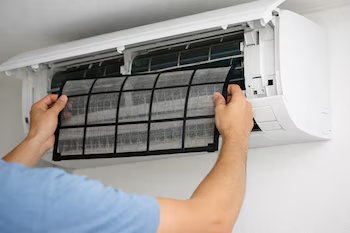
For those who rely on air conditioning, keeping the unit’s filters clean is paramount. Clean filters allow better airflow and require less energy to operate, ultimately boosting efficiency. Regular maintenance can lead to significant energy savings over time.
Kitchen Strategies for Heat Management
Additionally, consider adapting your cooking habits during the heat wave. Using the oven can significantly raise indoor temperatures. Opt for lighter meals like grilled fish or salads to keep the kitchen cooler and reduce overall electricity consumption.
Managing Your Refrigerator’s Efficiency
Don’t overlook your refrigerator, a key appliance during hot months. Keep it set between 3 and 7ºC, while ensuring your freezer stays between -16 and -18ºC. Proper temperature settings help your refrigerator operate efficiently without consuming unnecessary energy.
In conclusion, by making informed choices about using fans, air conditioning, and managing your kitchen and refrigerator, you can effectively beat the summer heat without letting your utility bills soar.