
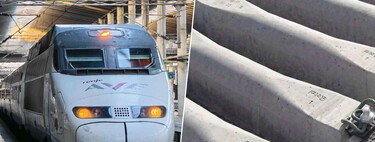
Renfe’s Ambitious Tender for High-Speed Trains
Renfe is on the verge of awarding a monumental contract for the supply of at least 30 high-speed trains, marking the most expensive tender in the company’s history at approximately 4 billion euros. This initiative not only aims to modernize Spain’s railway infrastructure but also serves as a test to re-establish Spain as a leader in high-speed rail globally.
The Financial Landscape of the Contract
The Contract Details. While 1.362 billion euros are secured for the purchase alone, the total long-term contract, factoring in maintenance costs, may reach 4 billion euros. This bidding process invites all companies capable of delivering the required high-speed trains, with an option for additional units should the Spanish company request them.
A key objective is to enable travel between Madrid and Barcelona in under two hours, necessitating new trains with a maximum speed of 350 km/h, supported by innovative Spanish technologies.
Specifications and Expectations
Renfe demands that the new trains accommodate up to 450 passengers, include provisions for bicycles, and feature cafeteria services. The contract stipulates that the successful bidder must deliver a minimum of five units within the first 40 months. Ultimately, the complete set of trains should be operational within six and a half years, highlighting the urgency of this initiative.
Challenges for Spanish Companies
José Ignacio Jainaga, president of Talgo, voiced concern regarding the stringent requirements. While Talgo boasts trains with 35% higher operational efficiency than competitors, it struggles to meet the specification of maximum speeds. Jainaga warned that citizens “would not understand” if local solutions were overlooked in favor of foreign options.
Another Spanish manufacturer, CAF, is also hindered by the contract demands. Although their trains are approved for speeds of up to 320 km/h, they lack the capacity to develop new technology in time to satisfy contract deadlines.
The Search for Foreign Alternatives
Without a Trace of Spain. Both Talgo and CAF seem unlikely to succeed under the current stipulations. The possibility of acquiring trains from international manufacturers appears to be growing, with Hitachi and Siemens positioned as leading contenders. Both companies have demonstrated capabilities to produce trains that meet, or even exceed, the required speeds.
Minister of Transportation, Óscar Puente, recently toured facilities of foreign manufacturers, indicating strong interest in their offerings. Notably, the Siemens Velaro Novo has potential operational speeds exceeding 350 km/h, while Hitachi’s ETR 1000 used by Trenitalia can reach 400 km/h.
China’s Competitive Edge
Puente has also expressed admiration for trains manufactured by the Chinese company CRRC Changchun Railway Vehicles, which can meet the required speed and are known for quick delivery and lower costs. He cautioned, however, that ongoing investigations by the European Commission regarding state subsidies for Chinese manufacturers could complicate their entry into the bidding process.
“Chinese manufacturers deliver trains at half the price in a period of six months to two years, while the European industry offers them to you for 60 months. I am the politician who buys and I don’t have 60 months.”
Conclusion
The high-stakes nature of this tender places immense pressure on Renfe to meet its goals effectively. As the search for suitable train suppliers continues, the outcome may significantly impact Spain’s standing in the high-speed rail sector and beyond.