
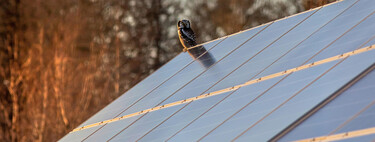
The Myth of Solar Parks as Bird Death Traps
In the past decade, solar parks have often been viewed with skepticism. The vast expanses of glass and silicon raised concerns that these installations might lead to ecological disasters, suggesting that large solar parks were akin to creating lifeless industrial deserts. People feared that the noise generated by transformers would scare away any remaining wildlife, making these areas ecological wastelands. However, recent scientific research has challenged this narrative.
Revolutionizing Observations with AI
The critical question was whether solar panels posed a threat to birds. To investigate this, a groundbreaking study published in the scientific journal Diversity employed state-of-the-art technology. Researchers set up high-definition cameras at five photovoltaic plants across the United States, collecting over 19,000 hours of daytime footage over several years.
Given the sheer volume of video footage, a specialized Artificial Intelligence model (MODT) was developed to detect and track moving objects. After filtering through more than 4,000 hours of recordings, researchers identified a staggering 68,646 appearances of birds, yielding compelling insights.
No Collisions, Only Coexistence
The results were surprising: not a single bird collision with solar infrastructure was recorded. Instead of being disoriented by the panels, birds seemed to incorporate solar parks into their daily routines. A significant 54% of observations showed birds flying over these installations, while others were seen foraging, preening, and even nesting in the structures themselves.
International Evidence of Biodiversity
Supporting this trend, a study conducted in Poland revealed that small-scale solar farms enhance bird diversity significantly. Researchers analyzed 43 photovoltaic parks alongside similar areas without such facilities and found that most bird species thrived in the parks. Species often threatened in agricultural settings, such as the wildcatcher and northern stonechat, increased in number within solar parks, thanks to safer breeding areas and less agricultural disturbance.
Local Success Stories
Similar trends are evident in Spain, where the Spanish Photovoltaic Union and environmental consultants reported that solar parks serve as genuine wildlife sanctuaries. For instance, in Minglanilla, 32 bird species were counted within the solar installations compared to just 19 in nearby agricultural areas. In other locations like Revilla Vallejera and Trujillo, the differences in species counts underscored the positive effect of solar parks on avian life, including protected species.
The Ecological Transition
The key to this biodiversity surge lies in perspective. Solar parks are typically built on lands previously used for intensive agriculture. As Martín Behar, director of Studies and Environment at UNEF, explains, these installations create “ecological exclusion zones” where pesticides and heavy machinery are absent. This shift allows for natural plant growth, which in turn attracts insects and subsequently birds of various sizes.
Active Management is Essential
However, merely installing solar panels is not enough. Effective ecological management is crucial. Energy companies must refrain from simply clearing land for convenience; instead, they should use native seeds, create ecological strips, allow for natural grazing, and avoid agrotoxins to promote flourishing wildlife.
Conclusion
The data challenges long-held fears that solar parks destroy rural ecosystems. With robust management practices, these facilities can indeed rejuvenate landscapes scarred by intensive agriculture, creating vibrant habitats where nature can thrive.
Image | AnkerSolix