
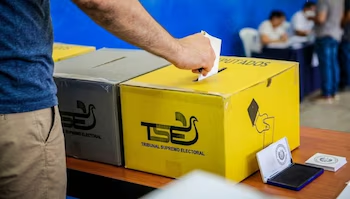
El Salvador’s Preparations for the 2027 Elections: A Comprehensive Overview
Introduction to the Supreme Electoral Tribunal’s Initiative
The Supreme Electoral Tribunal (TSE) of El Salvador has recently announced its first internal test for the Registration and Transmission System designed for the Vote Receiving Boards (JRV). This initiative, part of a strategic move, aims to enhance the electoral process leading up to the 2027 elections. By conducting this test across various strategic locations, the TSE seeks to bolster public confidence in the integrity of the electoral system.
Objectives of the Internal Test
The primary objective of the internal test was to:
- Verify Procedures: Ensuring that all protocols are in place and functioning as intended.
- Test Technological Equipment and Connectivity: Assess the reliability of the technology employed in the electoral process.
- Evaluate Response Times: Ensure that the time taken for processes remains efficient.
- Optimize Operational Coordination: Streamlining all logistical aspects of the electoral operations.
Strategic Locations for Testing
The TSE executed this test simultaneously at four distinct voting centers:
- Ahuachapán (West)
- El Carrizal (Chalatenango)
- San Marcos (Metropolitan area of San Salvador)
- San Fernando (Morazán, East)
This strategic distribution allowed the TSE to replicate actual voting and data transmission conditions, addressing diverse geographic areas in El Salvador effectively.
Assessment and Findings
During this comprehensive exercise, several key factors were evaluated:
- Efficiency of Processes: An essential component in guaranteeing a smooth electoral flow.
- Functionality of Equipment: Devices used for recording and transmitting votes were closely scrutinized.
- Infrastructure Robustness: The connectivity at each site was tested to prevent any disruptions during the actual elections.
The TSE was able to identify potential risks and outline areas for improvement that will enhance the electoral experience for both voters and electoral officials.
Importance of Technical Drills
These technical drills play an essential role in ensuring that citizens designated by lottery to serve on the Vote Receiving Boards are well-equipped to perform their functions. The TSE emphasizes that these preparations are a cornerstone of their strategy to uphold electoral transparency and reliability.
Future Directions
Post-evaluation, the TSE has committed to analyzing these test results thoroughly. This assessment will inform necessary adjustments to both the system and logistical arrangements before subsequent tests and the actual electoral process.
The focus remains on providing comprehensive training for personnel and maintaining technological updates to meet international standards of electoral transparency.
Upcoming Electoral Milestones
As the 2027 elections approach—scheduled for February 28, 2027—the electoral calendar is set to facilitate voting from abroad. Salvadorans living outside the country will be able to vote remotely from January 30 to February 28, 2027, with in-person voting limited to February 28 only. As of now, there are just 269 days until the elections, marking a crucial countdown for all stakeholders involved.
In summary, the TSE’s ongoing preparations and systematic testing illustrate a significant commitment to ensuring a fair and reliable electoral process in El Salvador for its citizens in 2027.