
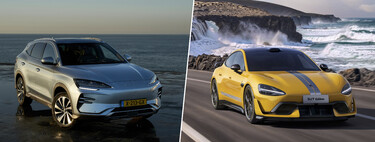
China’s Remarkable Surge in Car Exports
China has seen a significant increase in its car exports. While domestic sales appear to be stagnating, the number of vehicles leaving China’s borders has surged dramatically, indicating a potential new export record this year.
Explosive Export Growth
In April alone, China exported 901,000 vehicles, including 796,000 passenger vehicles. This figure marks an 85% increase compared to April of last year, highlighting a significant disconnect from previous years’ data. So far this year, the total number of exported vehicles has exceeded 3.13 million units, reflecting a growth of over 60% from the same period last year.
Aiming for New Milestones
China has set an ambitious goal of exporting 10 million vehicles this year. If current trends continue, exports could surpass this number substantially. Last year, China managed to place 7.1 million vehicles in various international markets, with forecasts indicating a modest increase to 7.4 million for this year. However, achieving the 10 million mark would represent a historic milestone and substantial growth beyond the 21.1% increase seen last year.
Domestic Challenges Fueling Exports
China’s internal market is experiencing challenges. The withdrawal of subsidies for electric vehicles (EVs) has led to a decline in local sales. The initial months of this year were especially tough, but sales have improved slightly, especially due to rising fuel costs resulting from the Hormuz crisis. Many vehicles were self-registered in anticipation of subsidy pulls, creating a stockpile that needed to be sold. Consequently, domestic sales have dropped by 25% compared to last year.
Exporting as a Lifeline
With local sales declining, exporting vehicles has become essential for Chinese manufacturers. Companies like BYD have reached export levels anticipated to be achieved only by 2030. This strategic pivot has allowed China to position itself as a provider of technologically advanced cars at competitive prices, achieving sensational growth rates: over 220% in Brazil and nearly 200% in South Korea, Australia, and Germany.
Tailoring Cars to Global Markets
China’s strength lies in its ability to offer vehicles tailored to specific market needs. While it primarily focuses on new energy vehicles (NEVs), it also manufactures plug-in hybrids that are exempt from tariffs in key markets like Europe. In Spain, for instance, four of the ten best-selling plug-in hybrid models are Chinese. This adaptability in technology and pricing is resonating with consumers worldwide.
Expanding Global Reach
China is continuously striving to penetrate new markets. Despite U.S. warnings, several Chinese brands are gaining traction in Mexico, and exports to Canada have seen unprecedented growth. BYD is even set to introduce its kei car in Japan, a bold move that previous foreign manufacturers had avoided.
Latin America: A Growing Market
Latin America is welcoming the influx of Chinese vehicles. As BYD activates its plant in Brazil, more and more domestic models tailored for European tastes are entering the market. This expansion contributes to a broader acceptance of Chinese automotive technology across the continent.
Notable Export Performers
While BYD has increased its exports by approximately 10%, other companies are making waves. Chery has reported growth exceeding 200%, Geely has grown by over 51%, and Leapmotor has skyrocketed by almost 400%. These statistics underscore the dynamic growth of Chinese automotive exports in recent months.
In summary, as global demand for affordable and technologically advanced vehicles continues to rise, China’s automotive sector is quickly adapting to seize opportunities on the world stage. The strategic shifts in focus toward international markets could not only stabilize the industry but also reinforce China’s position as a key player in the global automotive landscape.