
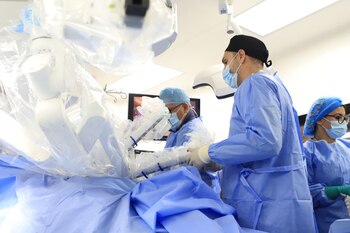
The Arrival of Robotic Surgery in Panama
What was once a privilege of advanced medical institutions in the United States and Europe is now a reality in Panama. Robotic-assisted thoracic surgery made its debut in the country’s social security system, marking a significant milestone for healthcare access in Panama. This initiative aims to provide advanced medical treatments for patients suffering from lung cancer, complex lung diseases, and tumors close to the heart.
A Historic First
The inaugural procedures took place at the National Specialized Cardiovascular and Thoracic Center of the City of Health from May 27 to May 29. This event represents the first time robotic thoracic surgeries have been performed by the Social Security Fund (CSS), a step that the institution anticipates will enhance the availability of highly complex technologies within its hospital network across the nation.
The Technology Behind Robotic Surgery
Robotic surgery is groundbreaking in its ability to carry out minimally invasive procedures. Surgeons control instruments from a console equipped with high-definition, three-dimensional imagery, allowing for unprecedented precision. Unlike traditional surgery, which often requires large incisions, robotic-assisted methods enable surgeons to operate through small openings.
Benefits of Robotic Surgery
This new approach significantly reduces the physical trauma experienced by patients undergoing thoracic surgery. Conventional lung surgery necessitated large incisions and rib separation, whereas robotic assistance allows for smaller cuts, leading to less postoperative pain and faster recovery. According to CSS’s general director Dino Mon Vásquez, some patients could be discharged within 24 hours post-surgery, a drastic improvement compared to multiple days required after open surgery.
Future Prospects and Accessibility
The CSS has acquired three robotic systems, which will also be installed in hospitals in Chiriquí and Herrera. This expansion is part of a broader initiative to introduce robotic surgery capabilities to various regions, ultimately improving patient access to these advanced medical services.
Telesurgery: A New Frontier
One of the most innovative aspects of this project is the potential for telesurgery. This technology would allow specialists in different regions to collaborate on surgeries in real-time, providing expert supervision and improving surgical outcomes. Such advancements are particularly important for rural areas, where access to specialized care is often limited.
A Step Towards Medical Modernization
The integration of robotic surgery into Panama’s healthcare system represents a move towards medical modernization. While robots cannot replace the surgeon’s expertise and decision-making, they enhance surgical capabilities by providing advanced tools that lead to greater precision, fewer complications, and quicker recoveries.
Through these pioneering thoracic surgeries, the CSS is not only improving patient care but is also paving the way for the adoption of robotic techniques in other medical specialties across the country. As this technology continues to evolve, it holds the promise of transforming healthcare delivery for countless Panamanians.