
First National Multihazard Drill 2026: Peru’s Preparation for Earthquakes
Understanding the National Multihazard Drill
Today, May 29, Peru is conducting its first National Multihazard Drill for 2026, aimed at mobilizing millions across the nation. Coordinated by the National Civil Defense Institute (INDECI), the drill encourages active citizen participation at 10:00 AM. This exercise is crucial for testing the response protocols and capabilities of the National Disaster Risk Management System (SINAGERD).
Commemorating Historical Context
The date holds particular significance as it marks the 56th anniversary of the devastating earthquake of May 31, 1970, which struck off the coast of Chimbote in the Ancash region. With a magnitude of 7.9, this tragic event led to catastrophic consequences, including an avalanche that buried the city of Yungay, resulting in over 70,000 fatalities. The national exercise serves to honor the memory of this tragedy and to reinforce a culture of preparedness across Peru.
Objectives and Implementation
The main objective of the drill is to enable the general population, as well as public, educational, and private institutions, to practice various response actions to different emergency scenarios. This involves evaluating evacuation times and the efficient use of first response resources.
Diverse Emergency Scenarios
During the simulation, INDECI will orchestrate various fictitious situations, including:
- Earthquakes
- Landslides
- Floods
- Fires
These scenarios are tailored to test the ability of individuals and institutions to respond to the specific risks posed by their geographic locations. Alarm systems, such as sirens and bells, will sound across the country at the start of the drill.
Evacuation Procedures
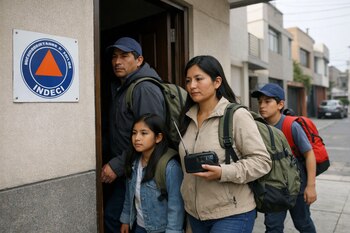
The exercise begins promptly at 10:00 AM. Citizens are instructed to move to a previously identified internal safe zone within the first two minutes of an alarm. Following this, the guide suggests evacuating toward designated external safe zones while ensuring everyone carries an emergency backpack.
Regional Adaptations
Each region in Peru will tailor the simulation based on its most likely risks. For instance, coastal areas will prioritize earthquake and tsunami scenarios, while mountainous and jungle regions will focus on the dangers of landslides and floods.
Participation and Coordination
Local authorities, alongside community and school brigades, will oversee the compliance with evacuation routes and the use of basic survival equipment. The drill involves emergency personnel, including:
- National Police of Peru (PNP)
- Firefighters
- Health professionals
- Volunteers
Their roles include evaluating procedures and preparing reports that will contribute to improving future response efforts.
Importance of Preparedness
The National Multi-Hazard Drill emphasizes the importance of disaster preparedness. Each participant is encouraged to identify safe evacuation routes and assemble an emergency backpack stocked with essentials like water, non-perishable food, a flashlight, and a portable radio.
Conclusion: Building Resilience
This day’s activities not only help to fortify individual readiness but also raise awareness among citizens about the significance of being prepared for natural disasters. As one of the most vulnerable countries in the Andean region, Peru’s commitment to building a resilient society is pivotal for reducing the impact of future emergencies. The culmination of this exercise will provide valuable insights into improving inter-institutional coordination, ultimately contributing to a more prepared and resilient nation.