
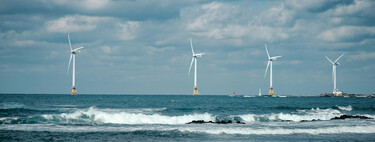
The Rise of Crowdlending in Euskadi’s Wind Power Initiatives
On May 18, the pre-booking for the Gure Haizea wind farm commenced, allowing locals to invest with promises of 7% guaranteed annual returns on a minimum investment of €1,000. It’s an impressive start, with 51 residents of Rioja Alavesa contributing in less than 24 hours, signaling a shift in community engagement in renewable projects.
A Long-Standing Challenge in Euskadi
For two decades, Euskadi has faced hurdles in launching new wind farms, the last of which began operations in 2006. Legal dilemmas, opposition from residents, and bureaucratic red tape have stalled numerous projects. As a result, the region generates a mere 7.9% of its electricity from renewable sources, even with a highly developed wind industry. However, the Basque Government aims to increase this to 15% by 2030, necessitating buy-in from local communities.
The Labraza Wind Farm: A Case Study
The Labraza wind farm, located in Oion, exemplifies these challenges and solutions. With a capacity of 40 megawatts and an investment of €59 million, it will generate enough energy to power around 30,000 homes while reducing CO₂ emissions significantly. But what sets this project apart is the innovative crowdlending model, allowing citizens to directly participate in financing the wind farm through the platform Fundeen.
How Crowdlending Works
Crowdlending enables individuals to lend money to projects like Labraza, receiving a guaranteed 7% annual interest in return. Investors can contribute between €1,000 and €100,000, with a goal of raising €3 million through this initiative. This model not only democratizes investment opportunities but also fosters a sense of ownership among residents, transforming the perception of the project from an imposition to a shared investment.
Addressing Local Concerns
Community opposition to wind farms often arises from a range of legitimate concerns, including their visual impact, noise pollution, and perceived inequities in profit distribution. With 84% of Spain’s renewable energy produced in rural areas, residents frequently feel they bear the externalities while large corporations reap the financial rewards.
The crowdlending approach aims to bridge this gap. By allowing local constituents to profit from the wind energy produced in their vicinity, the project fosters goodwill and a more collaborative approach. The name Gure Haizea, meaning “Our Wind,” encapsulates this philosophy.
Beyond Financial Returns
In addition to potential returns, local residents can benefit from a specially reduced electricity rate once the farm becomes operational. This project promises to create approximately 90 jobs during construction and contribute about €230,000 annually in taxes and fees to local municipalities—a significant boost to the regional economy.
Learning from Other Regions
Euskadi’s model is not unprecedented in Spain. Similar crowdlending initiatives have been successfully implemented in the Canary Islands, Navarra, and the Balearics, often focused on community involvement in renewable energy projects. These examples underline the potential viability of Gure Haizea, but the Basque experiment will serve as a critical test case for broader applications.
Questions That Remain
Despite the enthusiasm around crowdlending, several pivotal questions linger. Will the promise of 7% returns convert skeptics into supporters, or merely attract those already inclined to invest? Moreover, while the crowdlending amount represents only 5% of the total project cost, does it genuinely empower locals in project decision-making, or merely offer financial compensation?
As the Basque Government strives to achieve its renewable energy targets, the Gure Haizea initiative stands as a real-time experiment. It aims to answer crucial questions regarding community engagement in renewable energy projects and how to equitably distribute the benefits of the energy transition.
Conclusion
The question now facing the residents of Euskadi is not merely whether wind turbines will operate, but who will reap the benefits from them. With initiatives like Gure Haizea, the model for community involvement in renewable energy may well define the future of energy projects across Spain.