
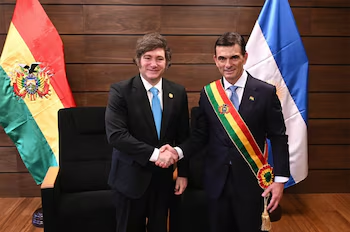
Argentina Rejects Evo Morales’ Allegations of Military Cooperation
The diplomatic relationships between Argentina and Bolivia have taken a contentious turn. Recently, Argentina’s Chancellor, Pablo Quirno, firmly rejected former Bolivian President Evo Morales’ assertions regarding alleged military cooperation with the current Bolivian government, led by President Rodrigo Paz Pereira. This situation highlights the complexities in regional politics and the ongoing tensions between various factions in Bolivia.
The Allegations
Evo Morales publicly accused the administration of Javier Milei of sending Hercules aircraft and anti-riot materials to support the Bolivian government in suppressing protests. These accusations emerged amidst rising unrest in Bolivia, where peasant groups opposed to Paz Pereira’s leadership have been conducting blockades and demonstrations, demanding significant political changes.
Argentina’s Response
In a dialogue with radio host Eduardo Feinmann on Radio Miter, Quirno dismissed Morales’ complaints. He emphasized that Argentina has supported Bolivia in humanitarian efforts, specifically pointing to the use of the Hercules plane to transport food to alleviate hardships caused by the blockades. Quirno stated:
“This proves what the axis of evil is. Argentina has contributed with a Hercules plane to transport food, which is Bolivian food, to bypass the blockades that those who sympathize with Evo Morales are creating.”
His response indicates Argentina’s stance to support Bolivia during critical times, distancing itself from the accusations.
The Broader Context
The backdrop of these accusations lies in Bolivia’s political turmoil. After Morales’ presidency ended in controversy and allegations of electoral fraud in 2019, the political landscape has remained volatile. Protests, blockades, and civil unrest have been persistent challenges, with divisions between Morales’ supporters and the current government.
Quirno went on to assert that the peasants, affiliated with Morales, are attempting to “subvert the democratic order.” Such comments reflect Argentina’s concern about the implications of political instability in its neighboring country, stressing the need for maintaining democratic integrity in Bolivia.
Bolivia’s Perspective
Joining the conversation, Bolivia’s Foreign Minister Fernando Aramayo expressed gratitude towards Argentina for its support during these turbulent times. The acknowledgment from Bolivia’s government suggests an appreciation for Argentina’s humanitarian efforts, despite the political tensions.
Conclusion
The diplomatic discourse surrounding Morales’ allegations illustrates the intricate dynamics of South American politics, where historical ties, current crises, and ideological divides converge. As both Argentina and Bolivia navigate these challenges, their cooperative efforts, primarily focused on humanitarian aid, may play a crucial role in stabilizing the region amidst underlying political tensions.
As developments unfold, it remains crucial to observe how these relationships evolve and address the growing challenges of governance, humanitarian needs, and political stability in Bolivia. The situation continues to be “news in development,” as both nations aim to clarify their positions while fostering regional support.