
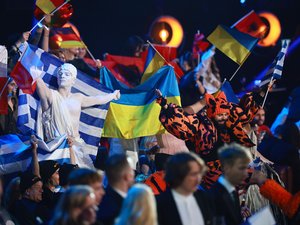
Bulgaria won its first victory in 70 years at Eurovision 2026 in Vienna thanks to singer DARA, during an edition marked by the boycott of five countries and boos against Israel, second in the competition. A look back at the highlights of this high-tension final.
For its 70th anniversary, Eurovision offered us an evening full of twists and turns. A look back at the highlights of this final, which saw Bulgaria and its representative DARA triumph.
Triumphant Returns and a Historic Victory
Bulgaria, Romania, and Moldova marked their triumphant return to the Eurovision stage in 2026 after absences of varying lengths since 2022, 2023, and 2024, respectively. Their comeback was significant, particularly for Bulgaria, as DARA delivered a standout performance that earned the country its first victory in Eurovision history with the infectious song “Bangaranga.” Romania impressively secured third place while Moldova finished in eighth, showcasing a strong resurgence.
Zero Points: A Shocking Trend
This year’s competition wasn’t without its controversies, especially regarding several countries receiving zero points. Monroe’s performance resulted in only 14 points, but Germany, the United Kingdom, and Belgium found themselves at the bottom of the leaderboard. For the UK, it marked the second consecutive year without any points from the public, as LOOK MOM NO COMPUTER placed last with just one point from the Ukrainian jury.
Germany’s Sarah Engels fared slightly better, ranking 23rd with a meager 12 points, and Belgium’s Essyla managed to secure 21st place thanks to 36 jury points, including a maximum of 12 points from Italy.
An Unprecedented Boycott
This year’s Eurovision suffered from an unprecedented boycott involving Spain, Ireland, Slovenia, the Netherlands, and Iceland, who withdrew in protest against Israel’s presence. As a result, only 35 countries participated, marking a low point in recent years. A response to the political climate, over 1,100 artists, including renowned names like Macklemore, Peter Gabriel, and Massive Attack, publicly called for a boycott, further intensifying the atmosphere surrounding the event.
Technical Hiccups Disrupt the Show
Technical difficulties also played a major role in the proceedings. Czech singer Daniel Zuzka experienced a moment of disruption during his performance of “Crossroads,” as a transmission glitch left the screen black for several seconds. The Czech Republic lodged an appeal over the matter, highlighting the impact of the disturbance. However, the EBU stated that since Zuzka’s performance and sound were unaffected, there would be no additional performance.
Israel Booed Yet Supported by Televote
Adding to the night’s drama, Israel’s contestant Noam Bettan finished in a controversial second place. Although he was eighth among the jury’s rankings, he emerged third in the televote for his song “Michelle,” temporarily leading with 220 points awarded by viewers. However, the announcement of his standing was met with overwhelming boos from the crowd, a notable response amidst the political backdrop. Whistles and the presence of a Palestinian flag during his performance highlighted the tensions surrounding this year’s event.
As Eurovision 2026 concludes, the show captivates audiences with a blend of historic achievements, emotional reactions, and unexpected challenges. It remains to be seen how these events will shape the future of the competition in both artistic and political contexts.