
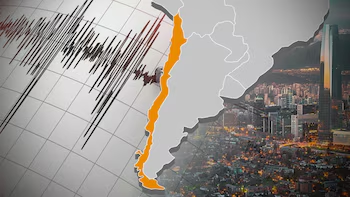
Recent Earthquake in Tacna, Chile
An earthquake of magnitude 4.6 shook Chile on May 15, 2026, at 11:45 a.m. (local time). The epicenter was pinpointed in the city of Tacna, located 33 kilometers from its center, and occurring at a depth of 124 kilometers, according to preliminary information from the National Seismological Center (CSN).
Coordinates and Impact
The CSN further revealed that the coordinates for the epicenter were -17.74 degrees latitude and -70.15 degrees longitude. In the event of such natural occurrences, it is crucial to rely on official sources for information to avoid misinformation or rumors.
Post-Earthquake Precautions
After an earthquake, residents are advised to check their homes for potential damage. Emergency communication should be prioritized, thus limiting the use of cell phones to critical situations to avoid overwhelming phone lines. Avoid lighting matches or candles until you are certain there are no gas leaks. Importantly, aftershocks can follow significant seismic activity, making vigilance essential.
- Emergency Planning: It’s crucial to have an emergency plan, organize drills, locate safe zones at home, school, or the workplace, and prepare an emergency backpack.
- During an Earthquake:
- Remain calm and find a safe location.
- Steer clear of objects that may fall.
- Avoid using elevators or staying in the stairwell or door frame.
- If in a vehicle, park away from buildings, trees, and poles.
Historical Context of Earthquakes in Chile
Chile is highly susceptible to seismic activity. Since 1570, around one hundred major earthquakes have occurred, with almost thirty of them being greater than magnitude 8.
The Strongest Recorded Earthquake
The most powerful earthquake in history, the Valdivia earthquake, struck on May 22, 1960, with a magnitude of 9.5. Originating near Traiguén in the province of Malleco, it caused catastrophic damage, including a tsunami that impacted areas beyond Chile, hitting parts of Japan. A significant death toll was confirmed, with over 2,000 victims.
Chile’s Last Major Earthquake
The last major earthquake, known as “27F”, occurred on February 27, 2010, with a magnitude of 8.8. The epicenter was along the coast in the Maule region, surprising many during the early morning hours. Following this quake, another tsunami affected coastal regions, though only minimal impact was felt in neighboring countries.
Statistical Data and Future Preparedness
The Department of Emergency and Disaster Risk Management estimates an earthquake above magnitude 8 occurs roughly every decade in Chile. As such, preparation is key. Public awareness campaigns and educational programs can help reinforce safety measures.
Significant Historical Earthquakes
Chile’s seismic history is marked by numerous destructive earthquakes. The Chillán earthquake of 1939 remains the deadliest, with estimates of casualties ranging from 24,000 to 30,000. Various other quakes, such as those in 1730 in Valparaíso and 1877 in Iquique, remind us of the persistent threat seismic events pose.
As seismic activity becomes more prominent, preparedness measures should remain a priority for individuals residing in affected areas. Familiarizing oneself with earthquake safety protocols may help mitigate risks and protect lives in future emergencies.