
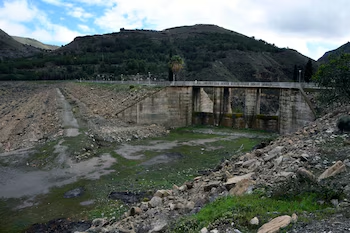
Water Reservoirs in Spain: Current Capacity Update
According to the most recent update from the Peninsular Hydrological Bulletin, Spain’s water reservoirs are currently at 83.88% of their capacity as of Saturday, May 16, 2026. This figure represents an increase of 0.21%, or 116 hm³, from the previous week, highlighting a positive trend in water reserve levels.
Importance of Water Reservoirs
Water reservoirs serve as a crucial indicator of the country’s water situation. As the year progresses, the capacity figures become vital, reflecting the impact on daily life and various industries reliant on adequate water supplies.
Key Statistics
- Total Capacity: 56,043 hm³
- Total Impounded Water: 47,010 hm³
- Weekly Increase: 116 hm³
- Comparison to Last Year: A year ago, the stored water was 43,234 hm³, which was 77.14% of the capacity.
Regional Reservoir Capacities
The water situation varies across regions in Spain, with notable percentages as follows:
- Andalusia: 87.00%
- Aragon: 88.32%
- Asturias: 83.33%
- Valencian Community: 59.61%
- Cantabria, Basque Country, and La Rioja: 90.26%
- Castile-La Mancha: 71.12%
- Catalonia: 91.13%
- Castilla y León: 87.38%
- Extremadura: 84.79%
- Galicia: 85.40%
- Murcia: 35.14%
- Navarre: 89.21%
Responsible Water Use
Despite the encouraging statistics, it’s crucial for individuals and communities to practice responsible water usage. The Ministry for the Ecological Transition (Miteco) has published several recommendations, especially for households with gardens, which can be significant consumers of water.
Water Conservation in Gardens
Plant Selection: Opt for plants that require minimal irrigation, focusing on native species that thrive in local conditions.
Reduce Lawn Size: Grass typically consumes more than two-thirds of garden water. Limiting lawn areas can drastically reduce overall water usage.
Natural Materials: Utilize natural materials like stones or gravel to cover garden surfaces, which helps retain moisture, prevents weeds, and beautifies the garden.
Localized Irrigation: Implement drip irrigation systems which deliver water directly to plant roots, maximizing efficiency and minimizing evaporation.
Rainwater Harvesting: Collect rainwater from rooftops and patios into containers or small tanks for irrigation purposes. Using gravity for irrigation can also be very effective.
Timing: Water gardens during cooler parts of the day to prevent evaporation and to avoid stressing plants with excessive watering.
By adopting these strategies, residents can significantly contribute to maintaining water reserves and ensuring sustainable water management in Spain.