
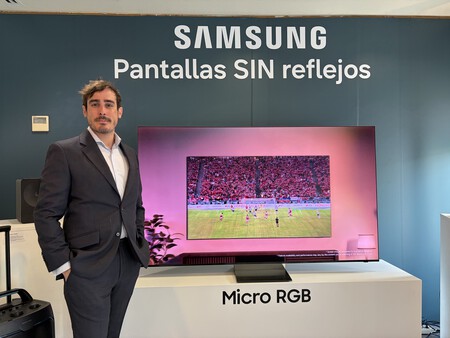
The Samsung R95H Micro RGB made a bold entrance, set against the illuminated backdrop of a showcase, aiming to highlight Samsung’s commitment to next-level imaging technology. During a presentation in Madrid, Pablo Requejo, the Director of the TV Area, introduced it as “the latest evolution in image technology.” This piece isn’t a full review; rather, it’s an initial exploration into why Samsung envisions the R95H as a flagship model that showcases its innovative Micro RGB technology first unveiled at CES 2026.
Understanding Micro RGB
What exactly is Micro RGB, and why is Samsung placing such significant emphasis on it? The term can lead to some confusion since it closely resembles Micro-LED—a technology that has been much discussed in recent years. However, there’s a notable distinction: Micro-LED operates without backlighting, with each pixel emitting its own light using tiny inorganic RGB LEDs. Conversely, Micro RGB retains the LCD format, but enhances backlighting with small LEDs that significantly enhance color and light management.
Requejo succinctly described the innovation: “In Micro RGB, each LED encompasses the three fundamental colors—red, green, and blue.” This technology potentially diminishes reliance on traditional color filters, ushering in a new era of “spectacular colorimetry.” The size of these LEDs is crucial, as Requejo mentioned, “the size of a human hair,” indicating Samsung’s intent to market this technology as a considerable leap rather than just a minor upgrade.
Technical Specifications of the R95H Micro RGB
Samsung Micro RGB R95H | |
|---|---|
Panel | 4K MICRO RGB LCD, 165 Hz VRR (100 Hz Native) |
Resolution | 3,840 x 2,160 |
Sizes Available | 65, 75, and 85 inches |
Image Processor | Micro RGB AI Engine Pro |
HDR | HDR10+ |
Sound | 4.2.2 channels, 70 watts (RMS), Dolby Atmos |
Connectivity | 4 x HDMI 2.1, 2 x USB-A, 1 x Ethernet, 1 x optical digital audio output, 1 x RF, 1 IC jack Wireless One Connect Ready compatible |
Wireless Connectivity | Wi-Fi 6E, Bluetooth 5.3 |
Operating System | One UI Tizen |
Energy Label | Class E |
Typical Consumption | 148 watts |
Maximum Consumption | 390 watts |
Dimensions | 1658.8 x 1019.2 x 349.1 mm (with base) |
Weight | 31.8 kg (with base) |
Price | From 3,698.99 euros |
Impactful Visual Performance
The initial visual experience matched Samsung’s intentions for the R95H: vibrant colors, ample brightness, and an impressive sense of depth. Even in a well-lit demo setting, the 75-inch unit maintained its image integrity without looking washed out. The colors were striking, setting a high-end standard that was visually persuasive before delving into technical details.
One area of keen interest was its contrast performance. The R95H’s capability to render convincing blacks without sacrificing brightness was evident. There was a satisfying separation of highlights and shadows, although a thorough examination in varied scenarios (like night scenes and specific viewing angles) is necessary for a comprehensive assessment.
Gaming and Software Integration
In terms of gaming, the Micro RGB could potentially excel. The inclusion of HDMI 2.1 supports responsive features like Variable Refresh Rate (VRR), essential for syncing the refresh rate with gaming consoles or PCs. Additionally, the Auto Low Latency Mode (ALLM) can automatically activate for a smoother gaming experience.
Moving on to software, the interface runs on One UI Tizen, offering a streamlined user experience with quick content access. The browsing felt intuitively organized with minimal clutter, enhanced by features like Samsung TV Plus and SmartThings.
Pricing and Future Potential
The R95H series is poised to shine in the high-end market, with starting prices reflecting its premium positioning. The R95H lineup, including a 130-inch variation, promises to expand the potential of Micro RGB technology further. While the 43-inch Crystal UHD model serves as Samsung’s mass-market staple, the R95H seeks to redefine high-end television expectations.
Ultimately, the Micro RGB’s debut indicates a promising evolution in LCD technology, raising questions about its future role alongside OLED and Mini LED offerings. Initial impressions suggest the R95H could carve a distinct niche in a competitive market.
Images | Xataka