
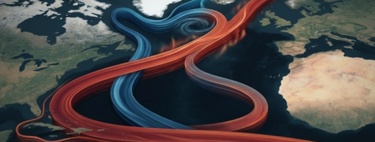
Understanding the Gulf Stream
The Gulf Stream, technically known as the Atlantic Meridional Overturning Circulation (AMOC), plays a crucial role in regulating the climate of the Northern Hemisphere, particularly in Europe. This ocean current is responsible for transporting warm water from the tropics to the eastern U.S. and western Europe. Without it, the consequences would be dire, leading to significant climatic shifts and harsher winters for northern regions.
Catastrophic Consequences of a Dying Gulf Stream
As the warming climate threatens the stability of the Gulf Stream, scientists are increasingly concerned about its potential collapse. Many have shifted their focus from debating if this will happen to considering how it can be prevented. Experts warn that if the Gulf Stream were to weaken significantly, we could see Europe’s climate become more similar to that of Canada, with severe impacts on agriculture, sea levels, and weather patterns.
Radical Proposals for Mitigation
Various proposals have surfaced in an attempt to mitigate these potential effects. Suggestions range from cutting carbon emissions to more extreme ideas such as cooling the Arctic, launching solar sunshades into space, or even fertilizing the ocean with iron to promote phytoplankton growth.
Closing the Bering Strait: A Controversial Idea
One of the more audacious proposals involves reconsidering a plan from the 1950s by a Soviet engineer who suggested the idea of closing the Bering Strait. Recent calculations have reignited interest in this concept, prompting scientists to assess its feasibility and potential benefits.
This idea may seem counterintuitive at first. The basic premise is that by restricting the flow of Pacific waters into the Arctic, you could potentially encourage the formation of deep water currents, thanks to differences in temperature and salinity. Thus, proponents argue, this could strengthen the AMOC.
The Mechanics at Play
As long as the AMOC is able to continue moving salt northward, it helps maintain global climatic stability. However, if the current weakens further due to climate change, closing the Bering Strait could theoretically exacerbate the problem, leading to even harsher climatic conditions.
Is This Plan Viable?
While it’s evident that constructing such a dam is not practical at this point, the discussion itself opens up a broader dialogue about humanity’s responsibility in managing climate change. As it stands, there are already existing structures like the Saemangeum in Korea, which is significantly shorter than what would be required to fully close the Bering Strait.
Reflection and Caution
The concept of altering one of the planet’s major oceanic flows calls for careful consideration. While the scientific community has not found consensus on the viability of this plan, it serves as a reminder of the urgent need for innovative solutions as we grapple with the ramifications of climate change.
Conclusion
The Gulf Stream’s fate is intricately linked to the global climate system. While drastic proposals like closing the Bering Strait may provoke skepticism, they illuminate the critical conversations we must have about our role in steering the future of our planet. As we explore these ideas, we must remain cautious, recognizing that miscalculations could lead to unintended consequences.
Image Credit: Fictional recreation
Additional Information: Concerns about the Gulf Stream and its potential weakening can no longer be ignored, as the impacts are already making themselves evident across Europe, especially in countries like Spain.