
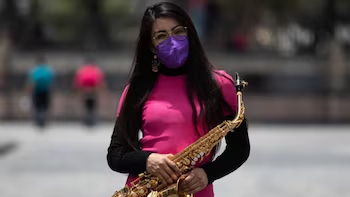
Supreme Court’s Controversial Decision on María Elena Ríos’ Case
On May 13, 2026, the Supreme Court of Justice of the Nation (SCJN) made a significant ruling concerning the case of renowned saxophonist María Elena Ríos, who endured a horrific acid attack in 2019. This decision has raised questions about the efficacy of the Mexican justice system, particularly in addressing cases involving violence against women.
Background of the Case
María Elena Ríos suffered severe injuries in an acid attack, an act linked to Juan Antonio Vera Carrizal, who is accused of masterminding this heinous act. The attack was classified as an attempted feminicide, a serious charge under Mexican law that seeks to address gender-based violence. The SCJN’s recent decision not to review the case effectively quashes any further examination of the judicial process surrounding Vera Carrizal.
The Supreme Court’s Ruling
In a session dedicated to reviewing the case, the court focused on whether a substitute judge could annul prior oral trial proceedings and reverse an acquittal ruling. Only three ministers—Loreta Ortiz, Yasmín Esquivel, and Hugo Aguilar Ortiz—voted in favor of reviewing the case. Ultimately, five other justices voted against attracting the request for review, leading to a unanimous dismissal of the appeal.
Implications for Justice
The SCJN’s ruling has incited outrage and despair among advocates for victims of domestic violence. Critics argue that this decision signals a substantial failure of the justice system to protect vulnerable individuals, particularly women. Ríos expressed her dismay, warning that “the justice system lost” by allowing the case to remain unresolved.
Closure of Legal Avenues
As a result of this decision, the SCJN has effectively closed the door to reviewing five separate protections associated with the criminal proceedings against Vera Carrizal. This turn of events raises serious concerns about the perceived accountability of perpetrators of violence against women in Mexico, illuminating a broader issue within the legal landscape.
Continuing the Fight for Justice
Although the SCJN’s ruling marks a setback for Ríos, her case has spotlighted crucial issues surrounding gender-based violence and the justice system’s handling of such matters. Activists continue to rally support, underscoring the need for systemic reforms to guarantee justice for victims.
Ríos remains a resilient figure in this fight, determined to raise awareness about the challenges faced by survivors of violence and the urgent need for effective legal protections. As the conversation around her case continues, many are hopeful that new legal strategies may surface in the future, providing a path toward justice that has so far been elusive.
Conclusion
The SCJN’s refusal to engage with María Elena Ríos’ case reflects a troubling pattern in handling violence against women within the judicial system. This decision serves as a reminder of the challenges that lie ahead for victims seeking justice and highlights the ongoing need for societal and systemic change to adequately address and prevent violence against women in Mexico.