
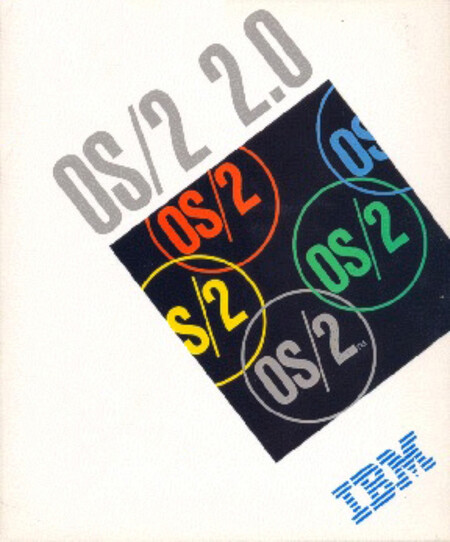
There are companies that have lived so long that their story is no longer told only through big launches, acquisitions, or business battles. It is also told in small details, in those seemingly minor scenes that, seen over time, end up explaining an era better than many official statements. Microsoft and IBM fall into that category. Their paths crossed when the personal computer was still defining many of its rules, and some of those discussions, even the most minute ones, revealed something deeper than a technical difference.
This narrative has been recovered by Raymond Chen, a veteran Microsoft engineer linked to the evolution of Windows for more than three decades. He recounts the memory of a colleague assigned to IBM’s offices in Boca Raton, Florida, during the collaboration between both companies on OS/2.
OS/2 was much more than just another name lost in software history. IBM and Microsoft presented it in 1987 as an operating system designed for the IBM PS/2 line, intended to take the PC beyond the limitations of DOS. The collaboration stemmed from a joint development agreement signed in 1985 when the project was not yet called OS/2. In that context, any interface decision carried more weight than it seems today, as many conventions of the modern PC were still being established.
Two Very Similar and Also Very Different Companies
The collaboration brought together two companies at very different points in their histories. Microsoft was still a young company, closely tied to software and a more direct way of working, while IBM had decades of experience, a vast structure, and a well-established corporate culture. Chen sums it up as a clash of perceptions: Microsoft viewed IBM as caught in endless bureaucracy, while IBM saw Microsoft as a group of undisciplined hackers. Each perspective held some truth.
The specific anecdote begins in Boca Raton, where a colleague of Chen’s was stationed at IBM. A discussion arose regarding which key should move focus between fields in dialog boxes. The Microsoft engineer decided to use the Tab key for this function, a seemingly innocuous choice today. However, IBM was not convinced and escalated the matter to higher-ups in Redmond, indicative of the overarching differences in decision-making culture.
Escalating Tensions
In Redmond, the petition was not viewed as a significant issue needing higher intervention. The engineer’s manager believed that since Microsoft had sent someone to Boca Raton, they could resolve such decisions on the ground. The feedback to IBM was clear: Microsoft supported the Tab choice. IBM, however, escalated their opposition to a vice president, several levels above the programming staff.
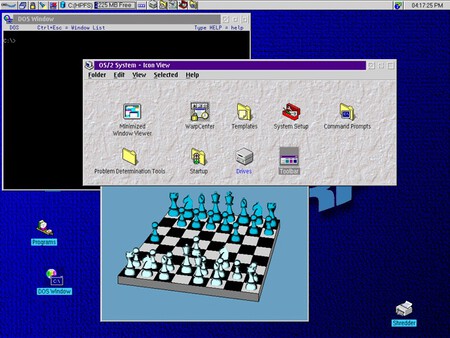
IBM’s approach was to seek equivalent representation in response to their complaint. To counter the vice president’s skepticism towards the Tab key, a Microsoft engineer’s colleague famously remarked, “Bill Gates’ mother is not interested in the Tab key.” This witty rebuttal underscored that the debate did not warrant further escalation within the corporate hierarchy.
A Lasting Impact
The comment had its intended effect: the discussion concluded, and the Tab key became the accepted standard for advancing through fields in dialog boxes. Today, this choice goes largely unnoticed, but it acts as a reminder of a time when design conventions were still being defined. This story exemplifies how a small interface decision transformed into a clash of culture, hierarchy, and technical criteria.

While the exact date of this discussion remains unclear, we can deduce it falls within the collaborative years surrounding OS/2, publicly launched in 1987. This allows us to appreciate the context without pinpointing a specific moment.
In conclusion, the decision-making processes behind the products we use every day often hide fascinating tales. Though some choices are monumental and visible, others, like the Tab key, remain unnoticed yet impactful. Such anecdotes provide a glimpse into the complex inner workings of the companies shaping our technology.
Images | Kaatvrtg (Wikimedia Commons)