
## The Discovery of Steinbach Meteorite
In July of last year, an academic investigation shifted the foundation of materials physics by focusing on an unexpected protagonist: the Steinbach meteorite, which fell in Germany in 1724. This legendary space rock housed a mineral that exhibited thermal behavior that defies current scientific classification. It had remained largely untouched for over 300 years, gathering dust in a glass case until scientists finally examined it using advanced instruments.
## The Steinbach Meteorite Explained
### Origins and Significance
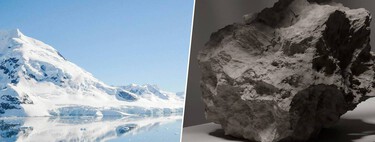
The Steinbach meteorite, named after the German region of Saxony where it landed, quickly made its way into museum collections because of its striking appearance and otherworldly origin. One of the notable fragments resides in the National Museum of Natural History in Paris. This piece contains meteoric tridymite, an exceptionally rare form of silicon dioxide. Unlike common quartz, meteoric tridymite forms under extreme conditions of temperature and pressure, typically found during meteorite impacts or in volcanic environments.
### Unique Thermal Properties
Why does this discovery matter? The tridymite from the Steinbach meteorite boasts remarkable thermal conductivity that remains consistent between -193 °C and 107 °C. This characteristic means it can conduct heat effectively whether in the frigid climate of Iceland or the scorching heat of a desert. No known material exhibits such behavior, which opens up new avenues for thermal management in modern technology. Applications could include electronic devices engineered to prevent overheating and advanced insulation systems in aerospace.
## Theoretical Backdrop
### Historical Context
In 2009, physicists Michele Simoncelli, Nicola Marzari, and Francesco Mauri introduced a unified equation based on Wigner transport formalism. This equation anticipated the existence of materials with temperature-invariant thermal conductivity, similar to that of the meteoric tridymite. Until the Steinbach meteorite, however, such materials had eluded discovery.
### Structure and Formation
Most minerals on Earth crystallize under uniform pressure and temperature ranges, forming standard crystal lattices. In contrast, minerals in the asteroid belt can undergo catastrophic collisions and cooling processes, producing phases absent in Earth’s crust. While tridymite can form in volcanic settings, meteoric tridymite gains the advantage of thermal stabilization from its long exposure to space conditions.
## Breaking the Rules of Physics
### A New Classification
Traditionally, materials are classified either as crystals, which feature ordered structures, or as glasses. Their thermal properties are generally expected to follow established patterns: crystal thermal conductivity decreases with temperature, while glass behaves oppositely. However, Steinbach meteoric tridymite defies these norms by exhibiting both crystalline order and glass-like disorder simultaneously. This unique combination creates what researchers have termed PTI conductivity, or propagation-tunneling-invariant conductivity.
## Discovering the Unexpected
The breakthrough discovery stemmed from the application of thermoreflectometry—a method that quantifies changes in optical reflectivity on a thermally excited surface using a pulsed laser. This technique revealed a “middle-range order” in the silicon atoms, validating predictions set forth by the Wigner equation.
## Challenges Ahead
Despite the groundbreaking potential of meteoric tridymite in materials technology, challenges remain. As of now, this material has been identified solely within the Steinbach meteorite. Extracting it from meteorites or synthesizing it in a lab poses significant hurdles. Interestingly, the study notes that tridymite has also been detected in Mars’s Gale crater, raising intriguing questions about its implications for the geological history of the red planet and future space mining endeavors.
### Conclusion
While the meteoric tridymite challenges the current laws of physics, it is crucial to understand that these laws are not false; they are simply incomplete. The discovery marks a significant milestone in our understanding of materials and opens the door to new scientific possibilities.