
Iran Delays Response to US Proposal Amid Rising Tensions in the Strait of Hormuz
Date: 08 May, 2026 | 06:12 am EST
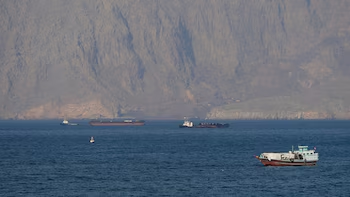
Ships and oil tankers in the Strait of Hormuz, off the coast of Musandam, Oman (REUTERS/Stringer/File)
Renewed Military Tensions
President Donald Trump announced on Thursday evening that the United States continues to negotiate with Iran, despite escalating tensions marked by recent military exchanges in the strategically crucial Strait of Hormuz. This area is vital for global oil transit, and the fragile ceasefire, which has been in effect for nearly a month, is now under strain.
Trump remarked, “It may not happen, but it could happen any day. I think they want the agreement more than I do.” His statements highlight a complex situation where military confrontations are occurring alongside diplomatic efforts aimed at conflict resolution.
Hostilities Intensify
On the same day, the United States Central Command (CENTCOM) reported that Iranian forces launched multiple missiles, drones, and small boats targeting three American destroyers in the Strait. Fortunately, none of the vessels were hit. This series of events showcases the precarious situation, with Iran’s military showing a readiness to engage despite ongoing negotiations.
Additionally, the Ministry of Defense of the United Arab Emirates reported its own military engagements, claiming that its air defense systems intercepted missiles and drones allegedly launched from Iran. The UAE’s defense activities indicate heightened vigilance in response to the Iranian threat.
Diplomatic Efforts Amid Military Actions
Despite the chaos, President Trump reiterated that the cessation of hostilities remains active. He described Thursday’s events as a “mockery,” stating, “Yes, that’s how it is. Today (Thursday) they made fun of us. We annihilate them. They mocked. I call it a mockery.” This stark rhetoric underscores his administration’s resilience in pursuing a diplomatic resolution while navigating the complexities of military confrontations.
Military Aid to Middle Eastern Allies
In an effort to bolster regional security, the United States has moved to approve the sale of weapons worth USD 25.8 billion to Middle Eastern nations, including Bahrain, Israel, Kuwait, Qatar, and the UAE. This decision, meant to enhance air defense capabilities, triples the amount previously disclosed. Such military support emphasizes the U.S. commitment to stabilizing its allies in the region against perceived threats from Iran.
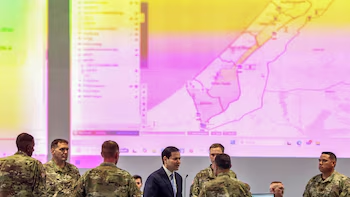
Rubio’s emergency approval waived the congressional review period to facilitate accelerated sales of Patriot interceptors and other missiles. (REUTERS)
Tensions Broaden to Regional Actors
As military actions unfold, there are signs of broader involvement. Reports have emerged that Hezbollah, another Iranian ally, launched drone attacks on Israeli soldiers, resulting in casualties. This escalation of regional hostilities raises concerns about a wider conflict that could involve multiple actors with vested interests in Middle Eastern stability.
Conclusion
In light of these developments, the future of U.S.-Iran negotiations remains uncertain. The intertwining of military confrontations and diplomatic efforts portrays a volatile situation where outcomes are unpredictable. As both sides navigate tensions in the Strait of Hormuz, the global community watches closely for signs of either an escalation or a diplomatic breakthrough.
With U.S. arms deals to regional allies and both military and diplomatic strategies at play, the region is bracing for what may come next in this high-stakes geopolitical game.