
The Overcrowding Crisis in Spain
In Spain, a curious and troubling paradox is emerging: while the number of people living alone is soaring, the rate of overcrowding in homes is escalating at an alarming rate. Studies by institutions like the National Statistics Institute (INE) and Eurostat reveal that an increasing number of residents are forced to endure overcrowded living conditions.
Understanding Overcrowding
Overcrowding is defined by Eurostat guidelines; homes are deemed overcrowded if they lack adequate space—specifically, a bedroom for each couple, each adult, or two young people of the same gender. This is a reality faced by many, particularly tenants in rental homes, highlighting significant shifts in Spain’s societal and economic landscape.
Current Statistics on Overcrowding
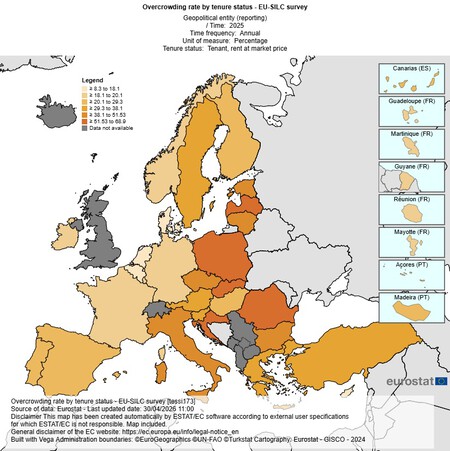
According to Eurostat, around 9.5% of the Spanish population lives in overcrowded conditions. While this figure remains relatively low compared to the EU average of 16.8%, the increasing trend cannot be overlooked. Spain’s overcrowding rate has climbed from 4.7% in 2018 to its highest level in a decade. The data indicates that the issue is particularly pronounced in the rental market, with rates reaching 20.5% among free-market tenants.
Factors Behind the Increase
There are numerous interwoven factors contributing to the rise in overcrowding:
Housing Market Dynamics: Over the past decade, rental prices have nearly doubled, from approximately €7.7/m² in April 2016 to €15/m². This severe increase limits options for families and first-time renters, leading many to share spaces to afford housing.
Demographic Changes: Spain’s population is growing, now exceeding 49 million, with a significant portion of this growth attributed to immigration. Many newcomers choose to live with acquaintances, exacerbating overcrowding.
Delayed Independence: Young people are taking longer to leave their family homes, resulting in multi-generational living situations. This trend often leads to overcrowding as family units grow or combine.
The Paradox of Single-Person Households
While overcrowding is on the rise, single-person households are also increasing. From 5 million in 2021 to 5.5 million in July 2025, single-person households now represent a significant demographic shift. Forecasts suggest that by 2039, single-person households could constitute about 33.5% of all homes in Spain, becoming the most prevalent living arrangement.
Conclusion: A Complicated Future Ahead
Spain’s rental market is undeniably complex, influenced by economic pressures, demographic shifts, and cultural changes. As lower-income families face the brunt of these challenges in overcrowded conditions, the path forward necessitates a multi-faceted approach that addresses both housing affordability and demographic realities.
Images: Unsplash