
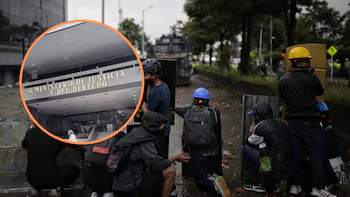
Recent Occupation of the Ministry of Justice by the First Line
Members of the First Line, a group formed during protests in Colombia, notably occupied the Ministry of Justice headquarters in Bogotá. Their primary demand was the release of several members who remain detained due to their involvement in acts of vandalism during the 2021 protests, as reported by La FM.
Background of the Protest
The occupation, which transpired discreetly over several days, required the evacuation of ministry employees. It was characterized as a pressure tactic intended to urge the government towards reevaluating the detention status of those involved. The Ministry of Justice, located on 53rd Street, faced a significant disruption as members sought to highlight their cause.
According to the reports, the movement aimed to secure the release of First Line members labeled by the court as perpetrators of vandalism during the civil unrest. These incidents occurred amidst widespread protests against tax reform in 2021, which were met with heavy police response and led to numerous arrests.
Negotiations and Secrecy
Despite the low-profile nature of the occupation, it turned into a negotiating table between the protesters and ministry authorities. Although the specific terms of the agreement reached have not been disclosed, it is known that the discussions lasted three days. Official statements later confirmed that the dialogue facilitated a resolution to the protests without further conflict.
A spokesperson from the Ministry of Defense clarified that the negotiations were not kept under wraps, emphasizing transparency in the process. Following the final discussions, the First Line members vacated the premises, having reached some form of consensus.
Court Ruling and Its Implications
This episode coincided with a pivotal ruling from the Superior Court of Bogotá regarding the 2021 protests. The court determined that many of the violent incidents were not merely spontaneous citizen actions but were orchestrated by illicit groups with connections to urban crime. This contradicted the narrative surrounding the protests, which many had initially viewed as legitimate expressions of public dissent.
The court’s investigation revealed a web of coordinated actions involving defendants who communicated with criminal elements, including factions linked to FARC dissidents. These revelations added layers of complexity to public perception of the protests, with implications for how such movements might be legislated and policed in the future.
Broader Societal Impact
The repercussions of the court’s findings have ignited renewed debate within Colombia about the nature of social movements. While it validates claims of infiltration by criminal organizations, critics argue that it could be misused to delegitimize mass protests. The court recognized both legitimate grievances and the reality of criminal actions during these significant civic demonstrations, underscoring the challenges faced by both participants and the authorities.
The discussions around health, security, and rights restoration, disengaged from the protests, signify an ongoing dialogue that touches on broader societal needs. This situation continues to evolve as families of the detained seek justice and transparency within the legal framework.
Conclusion
The occupation of the Ministry of Justice by the First Line appears to be a pivotal moment in a continued struggle for rights and recognition amidst Colombia’s tumultuous socio-political landscape. As this situation unfolds, the intertwining of protests, legal outcomes, and societal perception remains crucial for understanding Colombia’s path forward.