
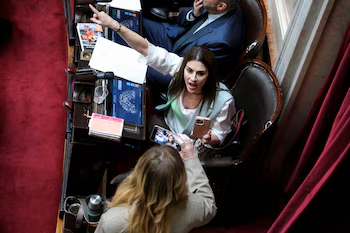
Key Absentees from Manuel Adorni’s Briefing
The recent briefing by Chief of Staff Manuel Adorni at the National Congress saw a notable turnout, with 231 out of 257 deputies present. However, two significant absentees drew attention due to their historical relevance in legislative affairs.
Marcela Pagano: A Former Ally’s Absence
One of the key absentees was Marcela Pagano, who once aligned herself with the government. Pagano was scheduled to be one of the first lawmakers to question Adorni but failed to attend. Upon inquiry, she revealed that her absence was due to her appearance at the federal courts in Comodoro Py.
“I am in court to discuss the money route related to Adorni,” Pagano mentioned, emphasizing her ongoing legal battles. “I am expanding a complaint regarding illicit enrichment.”
Pagano’s absence stems from her confrontation with Adorni, whom she had previously accused of employment irregularities during his time at the Ministry of Culture. Her decision to focus on the legal aspect rather than participate in congressional affairs showcases the intensity of her dispute with the Chief of Staff.
Miguel Ángel Pichetto: Institutional Concerns
The other significant absentee was Miguel Ángel Pichetto, a legislator known for respecting institutional integrity. Pichetto chose not to attend the briefing, critiquing the overall conduct of the Freedom Advances party and their approach to legislative proceedings.
His statement on social media highlighted that the event turned the Chamber of Deputies into “a space of barbarism,” demonstrating his concern for the declining standards in Argentine institutions. Pichetto’s long-standing experience in the Congress adds weight to his absence, making it a notable commentary on the current political climate.
Implications and Context
Pagano’s absence can be understood as part of her strategy to hold Adorni accountable through judicial means, rather than through political discourse. Her actions underscore a broader discontent within certain factions of the government towards accountability and transparency.
Conversely, Pichetto’s absence isn’t merely a personal choice but reflects an ideological stance against the perceived degradation of legislative conduct. His critique serves as a broader call for institutional respect and integrity.
Additional Noteworthy Absences
Though Pagano and Pichetto’s absences were particularly noteworthy, they weren’t the only ones missing. Other deputies, including Nicolás Massot and Fernanda Ávila, also chose not to attend, citing personal reasons.
The absence of members across various political factions—including Unión por la Patria and the PRO—highlights growing discontent and dissatisfaction related to key issues like government transparency and corruption investigations.
Conclusion
The absence of Marcela Pagano and Miguel Ángel Pichetto from Manuel Adorni’s briefing serves as a lens through which we can view the contentious atmosphere surrounding the current government. Their respective positions highlight significant ideological divides and underline the challenges facing Argentina’s political landscape. As these tensions continue to unfold, the implications for governance and legislative processes remain profound.