
Rethinking the Goldilocks Zone for Life Beyond Earth
For a planet to be conducive to life, the presence of water is often deemed essential. However, recent studies indicate that mere liquid water is inadequate; the amount of water plays a critical role in determining a planet’s habitability. A recent study reveals that the necessary volume of water for a planet to be a viable candidate for life is significantly greater than previously understood.
It Looks Habitable, But Is It?
Research conducted by scientists at the University of Washington through sophisticated computer simulations suggests that a planet must possess at least 20% to 50% of the water found in Earth’s oceans. This threshold is crucial for sustaining the natural cycles that promote life.
The Geological Carbon Cycle and Its Importance
To foster life, a planet must not only possess an atmosphere but also ensure its gaseous constituents are within a suitable range. Typically, volcanic activities lead to the release of large quantities of carbon dioxide into the atmosphere. When CO2 accumulates excessively, it can render the planet inhospitable. Fortunately, a series of mechanisms help regulate carbon levels effectively.
Carbon dioxide in the atmosphere often dissolves into tiny water droplets, which fall to the surface as rain. This rain erodes the rocks, allowing the dissolved carbon to flow into rivers and ultimately reach the oceans, where it is buried. Geologic processes, such as plate tectonics, then elevate this carbon back to the surface over millions of years, maintaining a delicate carbon balance.
Without Sufficient Water, the Cycle Fails
The interdependence of water and carbon recycling mechanisms is undeniable. If a planet lacks adequate water supply, the natural relocation of CO2 may fail to counterbalance the emissions from ongoing volcanic activity. An excess of atmospheric carbon dioxide generates heightened temperatures via the greenhouse effect, leading to increased water evaporation, exacerbating the inhospitable conditions.
Redefining the Goldilocks Zone
In astronomy, the habitable zone, often dubbed the Goldilocks zone, is defined as the region around a star that provides the ideal conditions for water to remain in liquid form. The paradigm is shifting, however, as we recognize that habitability is not solely contingent upon having liquid water — there must also be sufficient quantities of it.
Refined Models Reveal New Insights
While previous models have explored the geological carbon cycles of potentially habitable planets, they often neglected drier planets or did not incorporate sufficient variables. The latest models now consider overlooked factors such as wind dynamics. With this holistic understanding, it becomes clear that factors such as a planet’s rocky composition or proximity to its star are less critical than ensuring an ample supply of water. Without enough water, the possibility of supporting life diminishes considerably.
As we venture further into the cosmos in search of habitable worlds, these insights could shape future explorations and our quest to find life beyond Earth.
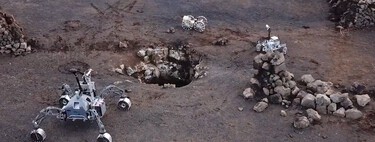
Image credit: M. Mizera / PTA / IAU100