
The Insect Apocalypse: A Global Concern
On a global scale, humanity is facing a natural disaster that we have not yet come to terms with: the “insect apocalypse.” Scientists have been documenting the decline of insect populations for years. While people may naively think, “How good is it to get rid of mosquitoes?”, this loss puts ecosystems essential for human life at risk. At the heart of this crisis is pollinators, whose disappearance not only threatens flora but also the food supply.
Bee Bricks: An Innovative Solution
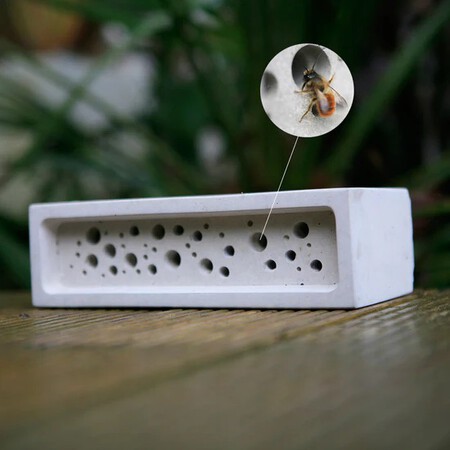
Faced with the ongoing urbanization and loss of natural habitats, architecture in the United Kingdom has begun to incorporate microconservation solutions into buildings. One groundbreaking example is the Bee Brick, a brick that not only serves as structural support but also provides housing for bees. What started as a sustainable design project has transformed into an urban policy phenomenon spreading globally.
Structure and Design of Bee Bricks
A bee brick resembles a standard brick but features 18 cavities of varying diameters on its front face. The back is solid, preventing insects from entering the building’s interior. Constructed from precast concrete, these bricks comprise 75% recycled granite from the Cornish kaolin industry and 25% granite aggregate and binder.
Years of research by engineering and biology professionals supported this innovative design. The Bee Brick can be integrated into new buildings, replace existing bricks, or be placed independently in gardens. The first brick, designed by British company Green&Blue, hit the market in 2014.
Importance of Bees in Our Ecosystems
Bees are vital to the pollination of terrestrial ecosystems. According to the IPBES Thematic Assessment, over three-quarters of the world’s major crops benefit from animal pollination, with approximately one-third of global food production reliant directly on it. An astonishing 87.5% of flowering plants on Earth are pollinated by insects or animals, underscoring the critical role bees play in our food systems.
While the public often associates pollination with honey bees (Apis mellifera), this is a misconception. Most bees are solitary, do not produce honey, and lack a queen or colony. Their decline threatens numerous plant species that depend on them for pollination.
The Context of Bees in the UK
In the UK, around 270 species of bees exist, with 90% being solitary. This trend is not unique to the UK; similar findings appear on the European red list of bees by the IUCN. Rapid urbanization, pesticide usage, and climate change severely threaten these populations, reducing their nesting habitats.
Historically, bees nested in cavities found in construction materials, such as dead wood and gaps in stone structures. However, modern construction practices have created homogenous and sealed environments that eliminate these natural nesting sites.
Legal Mandates for Bee Bricks
Brighton & Hove became the first city in the UK to mandate Bee Bricks in new buildings, requiring compliance from January 2022 for all structures over five meters high. Similarly, Cornwall adopted planning guidelines in 2018 that include Bee Bricks as a biodiversity measure.
Assessing Effectiveness
Trials conducted in Cornwall from 2019 to 2021 showed modest occupancy rates for Bee Bricks, with evidence of nesting activity in varied environments. The most common users were the red mason bee (Osmia bicornis) and leaf cutter bees from the genus Megachile.
Research from Conservation Evidence at the University of Cambridge indicates that artificial habitats can effectively support solitary bees if well-designed and strategically located.
Challenges and Criticisms
Despite their potential, some experts express concerns. Dave Goulson, a prominent bee researcher, warns that the size of Bee Brick cavities may exclude many solitary bee species. He cautions against viewing Bee Bricks as a panacea for biodiversity, arguing that “more substantial action is needed.”
Moreover, concentrating nesting sites may inadvertently promote mite and pathogen spread, a scenario unlikely to occur in nature where nests are typically dispersed.
Conclusion: A Step Forward in Conservation
While Bee Bricks are a useful component in efforts to preserve bee populations, they should not be seen as a solitary solution. These bricks require proper maintenance and contextual planting to be effective. Therefore, they should be part of a broader strategy involving sustainable architecture, habitat conservation, and environmental awareness to truly support our vital pollinators.