
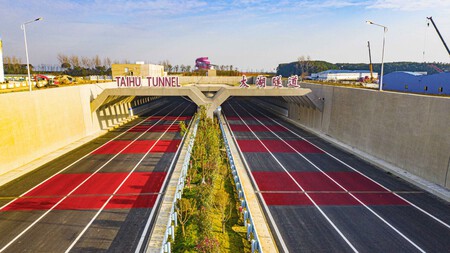
Exploring China’s Longest Underwater Tunnel: A Marvel Beneath Lake Taihu
Introduction to the Taihu Tunnel
Nestled beneath the surface of Lake Taihu in Jiangsu province, China, the Taihu Tunnel stands as a testament to modern engineering. Spanning nearly 11 kilometers, this remarkable structure is not just a feat of infrastructure; it has blossomed into a significant tourist attraction, captivating visitors with its innovative design and stunning light displays.
The Functionality of the Tunnel
The primary purpose of the Taihu Tunnel is to alleviate traffic congestion in an area marked by rapid urban development. Connecting the expressways of Suzhou, Wuxi, and Changzhou, it enhances transit between Shanghai and Nanjing, two prominent cities in China. By facilitating smoother travel, the tunnel aids in economic growth within the prosperous Yangtze River Delta region.
Engineering Marvels and Construction Dynamics
Building the Taihu Tunnel was no easy task. Construction began in 2018 and continued for almost four years, with a budget of approximately 9.9 billion yuan (around 1.23 billion euros). Engineers faced significant challenges due to the lake’s clayey silt, which rendered conventional excavation methods impractical. Instead, they implemented a cofferdam technique, dividing the route into sections and constructing temporary dikes for a dry work environment.
LED Light Show: A Key Attraction
A standout feature of the Taihu Tunnel is its spectacular ceiling adorned with millions of LED lights. These lights not only illuminate the tunnel but also change colors and display dynamic images. This innovative design combats driver fatigue, transforming a potentially monotonous journey into a captivating visual experience.
Architectural Highlights
Beyond the LED spectacle, the tunnel’s ventilation systems are carefully planned architectural elements. The three ventilation points emerging from the surface of the lake are designed as sculptural masterpieces. Notable designs include the Jade Snail, a striking structure equipped with 174,000 LED points, which serves as a beacon of both beauty and function.
A Boost for Local Tourism
The opening of the Taihu Tunnel has also significantly bolstered local tourism. Reports indicate a 50% increase in visitors to nearby attractions such as the Lingshan Great Buddha, one of the largest in the world, and Nianhua Bay. Liu Xiaoyu, head of Wuxi National Taihu Lake Tourism Resort, emphasized that the tunnel would enhance tourism experiences and hotel occupancy in the region.
Global Context: Longest Underwater Tunnels
While the Taihu Tunnel is the longest underwater tunnel in China, it is essential to note its global standing. It trails behind Norway’s Ryfast tunnel, which measures 14.3 kilometers, and the Eurotunnel, connecting England and France, which boasts a submerged length of 37.9 kilometers.
Conclusion
In essence, the Taihu Tunnel is much more than a transportation route; it embodies the spirit of innovation and aesthetic engineering. By merging functionality with an artistic vision, it promises to continue drawing tourists while serving the dynamic needs of one of China’s busiest regions. Visitors are invited to explore and enjoy this remarkable journey under the waters of Lake Taihu.