
Electoral Justice March in Lima: June 19 Mobilization
Overview of the Mobilization
On June 19, 2026, Together for Peru, led by Roberto Sánchez, initiated a significant protest named ‘Electoral Justice’ in the Cercado de Lima. This mobilization aims to rally support for what participants view as a fundamental issue: the defense of their votes amid contentious election results reported by the ONPE (National Office of Electoral Processes). This situation arose when initial counts favored a leftist candidate, only for subsequent tallies to shift in favor of Keiko Fujimori of the Popular Force party.
City Preparations and Security Measures
In anticipation of the protest, the Municipality of Lima and the National Police of Peru implemented extensive security measures starting at midnight on June 19. These preparations are designed to ensure public order and protect the city’s heritage. A substantial force of 4,500 police officers was deployed to the area, complemented by 800 security guards, 200 inspectors, 1,000 surveillance cameras, and 15 drones monitoring the situation.
Planned Gatherings and March Route
Demonstrators from various regions were instructed to congregate at the Field of Mars before progressing toward the historic San Martin Square. The event’s commencement is scheduled for 4 PM local time, June 19.
Three designated pre-concentration points were established:
- East Lima protesters will gather at Acho Square, traveling along Abancay Avenue to San Martin Square and Tacna Avenue.
- Protesters from North Lima and Callao will assemble at Union Square, proceeding along Alfonso Ugarte Avenue.
- Those from South and Central Lima will meet at the party premises located at Tarma 361.
All groups will ultimately merge at the Field of Mars for the final meeting.
Traffic Disruptions and Public Reaction
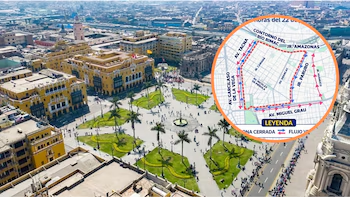
As expected, vehicle closures in the Historic Center of Lima have resulted in significant traffic congestion affecting locals and visitors alike. The restricted areas span from the Rímac River boundary to major avenues including Amazon, Paruro, Miguel Grau, Garcilaso de la Vega, and Tacna. These restrictions were enacted to facilitate security measures around the protests.
Drivers have expressed frustration due to the traffic delays. One motorist noted, “It’s horrible congestion to get into the center. I have to turn around to get into Real Plaza,” reflecting widespread dissatisfaction with the current situation.
Despite the traffic chaos, business representatives, like Salvador Ode, have indicated that pedestrian traffic remains unimpeded, urging citizens to visit shops in the area.
Mayor’s Statements on the Situation
Mayor Renzo Reggiardo addressed the issues related to traffic congestion, attributing the delays not to municipality actions but to the protest organized by Together for Peru. He emphasized the city’s commitment to protecting its UNESCO World Heritage Sites and has warned that responsibility for any disruptions rests on those who disregard restrictions against protesting in sensitive areas.
Conclusion
The ‘Electoral Justice’ march highlights essential elements of political advocacy and public protest in Peru’s current landscape. As citizens gather to voice their demands for electoral transparency, the city’s preparedness reveals a broader context of civic engagement amid challenges. As the situation unfolds, public reactions, government responses, and the impact on civic life in Lima will certainly be points of continual observation.