
The Connection Between Oral Health and Heart Health
Various recent scientific studies highlight a direct relationship between oral health and the risk of cardiovascular diseases, including heart attacks. In this context, using dental floss emerges as a crucial component of daily oral hygiene.
Impact of Dental Floss on Cardiovascular Health
Accumulation of bacterial plaque between teeth can trigger periodontal diseases such as gingivitis and periodontitis. These oral conditions extend their impact beyond the mouth, as bacteria and inflammation can enter the bloodstream, contributing to atherosclerosis—the hardening and clogging of arteries, a primary risk factor for heart attacks.
For example, a significant study presented by the American Heart Association in 2025 analyzed data from over 6,000 individuals followed for 25 years. It concluded that those who floss at least once a week demonstrate a 22% lower risk of ischemic stroke and a 44% lower risk of cardioembolic infarction compared to their floss-less counterparts.
Reducing Inflammation through Flossing
Flossing is associated with a 12% reduction in the risk of atrial fibrillation, a type of arrhythmia that could lead to heart attacks or strokes. The scientific rationale suggests that dental floss helps mitigate chronic inflammation in the body. By removing food debris and harmful bacteria between the teeth, flossing decreases the likelihood of infections and systemic inflammation, which can damage blood vessels and lead to clot formation.
Best Practices for Flossing
Oral health specialists recommend flossing at least once a day. The best time is typically at night before brushing to remove food particles and plaque accumulated throughout the day. However, flossing post-meal can provide an extra layer of cleanliness.
How to Floss Effectively
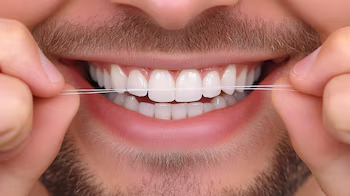
- Cut 40-50 centimeters of dental floss. Wrap most around one finger, with the remaining around the opposite finger, leaving about two inches free.
- Hold the floss with your thumbs and index fingers. Gently slide it between your teeth, avoiding force to prevent gum irritation.
- Form a “C” shape around each tooth. Slide the floss up and down while hugging the tooth’s sides from the gum to the tooth edge.
- Use a fresh section for each tooth. Unwind a clean piece of floss for every new space to maintain hygiene.
- Don’t skip the back of your teeth. Ensure both sides of each tooth, including molars, are cleaned.
- Rinse your mouth after flossing. This removes loosened debris and enhances freshness.

Consistent and proper flossing not only prevents bacterial plaque buildup but also protects gums and lowers the risk of cavities and periodontal diseases—significantly benefitting cardiovascular health.