
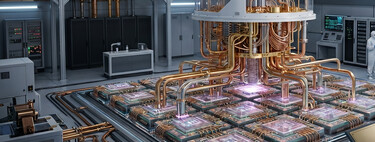
China leads the world’s production of lithium batteries, accounting for an impressive 80% of the batteries used in electric vehicles. The country’s dominance is exemplified by its two major manufacturers, CATL and BYD, which held market shares of 42.1% and 13.4% respectively as of February 2026, according to SNE Research. This commanding position stems from several key factors, including China’s status as the world’s largest producer of lithium and rare earths, essential raw materials for battery manufacturing.
Innovation Drives Market Leadership
In addition to resource availability, China excels in processing these materials and has established a production capacity that allows for large-scale battery manufacturing at competitive prices. A notable advantage lies in the innovative approach taken by companies like BYD and CATL. By investing in advanced technologies such as lithium iron phosphate (LFP) batteries, these manufacturers have been able to stay ahead of their competitors. However, this progress comes with significant challenges, particularly their dependency on fossil fuels.
The Natural Gas Paradox
Chinese battery producers, specifically CATL and BYD, face a critical dilemma: their manufacturing processes are heavily reliant on natural gas. This dependency makes them vulnerable to geopolitical instability, such as the tensions arising from the ongoing conflict in Iran. Producing batteries involves multiple thermal processes that require high and consistent temperatures, including the coating of electrodes and the evaporation of solvents in massive ovens.
Battery factories have been designed around gas boiler and pipeline systems.
The processes involved consume considerable amounts of thermal energy, with gas boilers currently being the most effective and cost-efficient means of generating the steam and heat required in production. Although CATL has made strides in adopting renewable energy sources like wind and solar, these alternatives have not yet proven capable of replacing the thermal energy produced by natural gas in large-scale manufacturing.
Challenges in Transitioning to Renewable Energy
Natural gas provides a level of heat that is challenging to replicate through electrical resistance on an industrial scale. Furthermore, existing facilities are designed around gas boiler systems; shifting to electric alternatives necessitates substantial investments in restructuring production infrastructure, potentially resulting in increased battery prices and reduced competitiveness.
Market Vulnerability and Future Directions
As previously noted, the heavy reliance on natural gas exposes CATL and BYD to fluctuations in the global energy market. Rising gas prices, exacerbated by geopolitical tensions, directly influence production costs per kilowatt-hour. In response, CATL is investigating solutions to mitigate this vulnerability. Currently, directed infrared radiation for drying processes appears promising as an alternative to gas boilers, yet natural gas remains the predominant energy source in China’s manufacturing landscape, outpacing all renewable and hydroelectric plants combined.
Image | BYD
For more insights, please take a look at Volt Insight.
In related news, Xi Jinping’s “Made in China 2025” plan is rapidly advancing, showcasing how China is securing pivotal technologies for the future.