
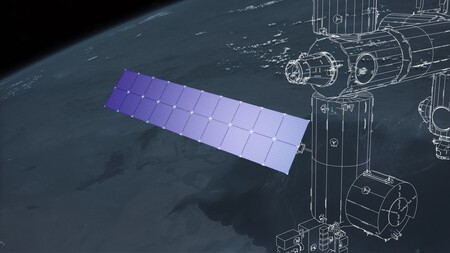
For years, the concept of space-based data centers was a tantalizing vision, often viewed as a distant dream. Yet, recent developments have shifted this narrative. TechCrunch reports that Kepler Communications has successfully launched the largest operational computing cluster currently in orbit, marking a significant leap from theoretical discussions to tangible infrastructure.
What Kepler Has Launched
Rather than a colossal facility floating above Earth, Kepler’s innovation comprises a distributed cluster formed by 10 functional satellites. Together, these satellites host approximately 40 Nvidia Orin processors aimed at facilitating edge computing and communicate via laser links. This remarkable set, initiated in January, represents the most extensive active computing cluster in orbit to date. The organization envisions this network as a constellation capable of virtually real-time data transportation in space.
The Nature of Orbital Computing
Kepler’s approach diverges from the conventional model of Earth-bound data centers. Instead, it presents a distributed architecture integrating processing and connectivity adapted to the unique conditions of space. This distinction is crucial as it distinguishes between broad aspirational goals championed by major players like SpaceX and Blue Origin and Kepler’s immediate, mission-centric applications.
Addressing Immediate Needs
Orbital computing proves invaluable because it alleviates the need to transmit all data back to Earth for processing. By harnessing computing resources where data is generated, systems can deliver faster responses, especially critical for sophisticated sensors and time-sensitive applications. Kepler’s network also aims to provide foundational services for future processing and connectivity among various space assets, moving data collected from both terrestrial uploads and onboard payloads.
Innovative Partnerships: Sophia Space
Emerging on the scene is Sophia Space, a startup eager to deploy its proprietary operating system onto one of Kepler’s satellites. This initiative will execute configurations across six GPUs distributed over two ships, a process considered routine in terrestrial data centers but groundbreaking for orbital applications. Sophia’s pilot has significant implications for risk reduction ahead of its first launch in late 2027, focusing on developing space computers that utilize passive cooling to mitigate overheating—one of the primary challenges in this field.
Kepler’s Vision
In a climate bustling with discussions about orbital data centers, Kepler aims to carve a unique niche. The company emphasizes a commitment to communication solutions, presenting a hybrid optical constellation designed to enhance data flow in low-Earth orbit and beyond. Kepler positions itself as infrastructure for space applications rather than being confined to a data center label.
Looking to the Future
Kepler’s successful launch signifies the dawn of a new era in orbital computing. This advancement places orbital computing firmly out of the realm of lofty presentations and into practical applications. With competitors like SpaceX planning a massive AI-driven satellite network, Google testing solar-powered chips in orbit, and Blue Origin unveiling plans for a satellite constellation exceeding 5,000 units, the future is poised for remarkable growth. Moreover, companies like Starcloud and Aetherflux are also gearing up to launch innovative space assets, with more missions planned for the coming years.
Images | Kepler Communications | Sophia Space
In Xataka | The mystery of the misinflated balloon: the more we calculate the size of the Universe, the less sense it all makes