
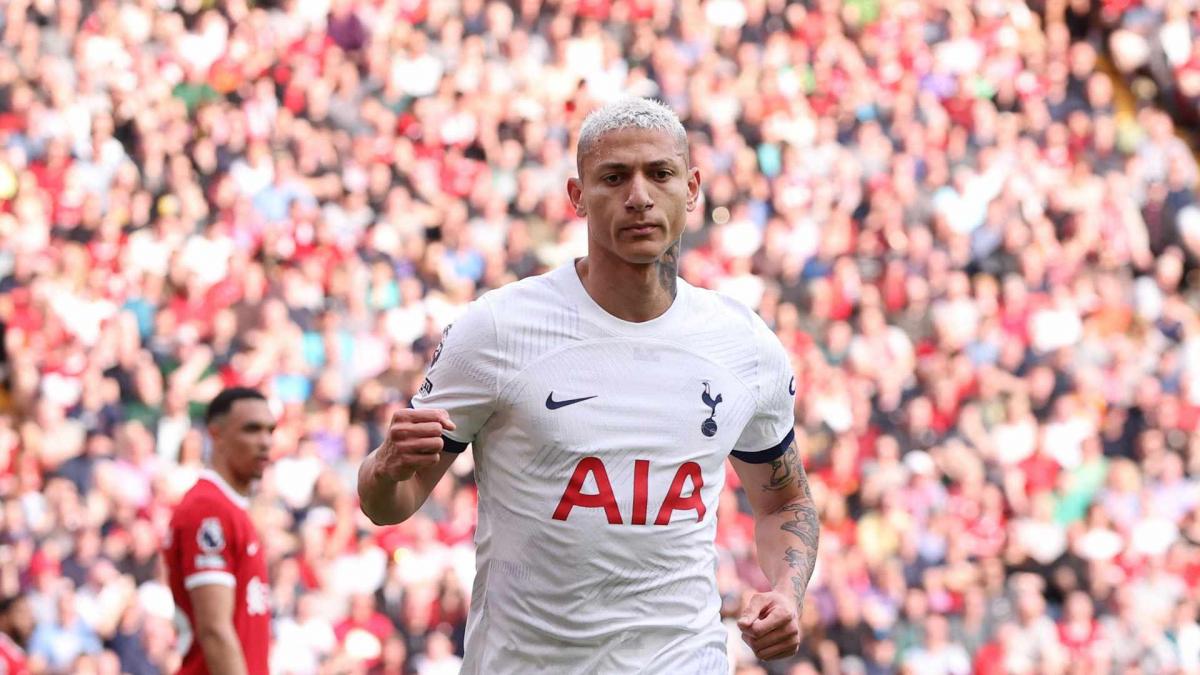
Richarlison’s Phone-Free Commitment for the 2026 World Cup
In a candid discussion with France Football, Tottenham Hotspur forward Richarlison has shared his decision to eschew his phone during the upcoming 2026 FIFA World Cup. This revelation stems from his experiences during the 2022 World Cup, where off-field distractions hampered his performance.
The Impact of Distractions on Performance
Richarlison’s reflections on the 2022 World Cup reveal a complex interplay between professional responsibilities and personal issues. He conceded that the pressure of non-football matters—such as family concerns and past relationship troubles—significantly impacted his mental state and performance on the pitch. Specifically, in the quarter-final match against Croatia, he felt these distractions intensified, contributing to Brazil’s disappointing exit from the tournament.
“At the 2022 World Cup, I found myself having to deal with non-football things, family worries, issues with old girlfriends… That’s why I was less good against Croatia,” he explained. Despite battling through a thigh injury during that crucial match, these external factors clouded his focus, highlighting how personal life can affect professional performance.
A Bold Decision for Focus and Clarity
Richarlison’s decision to ditch his phone in 2026 stems from a desire for greater concentration and mental clarity. By removing this constant source of distraction, he aims to fully immerse himself in the tournament and prioritize his performance. The Brazilian striker believes that a phone-free experience will allow him to focus solely on football and his team’s objectives without the interference of off-field disturbances.
This outlook reflects a growing awareness among athletes about the psychological toll that technology and social media can take, especially during high-stakes competitions. Richarlison’s decision is not just a personal strategy; it symbolizes a broader trend where athletes seek to minimize distractions in favor of peak performance.
Will Others Follow Suit?
Richarlison’s commitment raises an interesting question: will other athletes follow his lead? The sports world is rife with stories of players who struggle with the pressures of fame and the incessant demands of communication. If successful, Richarlison’s approach could inspire more players to go off the grid during the tournament, focusing solely on the game and their teammates.
This might also lead to discussions at the organizational level, prompting federations and teams to adopt policies that allow players to disconnect from the digital world during crucial competitions—thereby fostering a healthy environment for athletes to thrive.
Conclusion: A Lesson in Focus
Richarlison’s decision to opt against using his phone during the 2026 World Cup serves as a poignant reminder of the importance of mental focus. Striking a balance between personal life and professional commitments can be daunting, but by taking proactive steps to limit distractions, athletes like Richarlison can find the clarity needed to perform at their very best.
As the countdown to the 2026 World Cup continues, fans and fellow players alike will be watching closely to see how this bold decision affects Richarlison’s game. In the high-pressure environment of international football, sometimes the most challenging opponent can be the distractions off the field.