
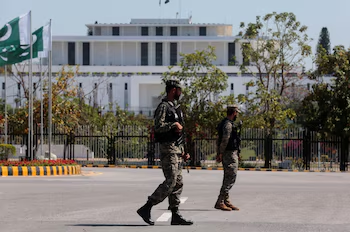
Pakistan Armored Islamabad Ahead of Peace Negotiations
Increased Security Measures in the Capital
The Pakistani Army has deployed a significant number of police and military personnel in Islamabad, reinforcing security measures as key access points to the “Red Zone” have been closed. This enclave houses essential government and diplomatic buildings and requires heightened security amid rising geopolitical tensions. The move comes just one day before crucial negotiations between the United States and Iran, mediated by Pakistan.
Context of the Peace Talks
As these discussions approach, American President Donald Trump conveyed his “great optimism” regarding a potential peace agreement. He urged the Iranian government not to impose tariffs on oil tankers in the strategically significant Strait of Hormuz. This statement reflects the high stakes involved in the negotiations, which aim to stabilize a volatile situation impacting global energy markets.
Meanwhile, Iranian Supreme Leader Mojtaba Khamenei reaffirmed Iran’s commitment to safeguarding its interests, stating that the Islamic Republic does not seek to maintain armed conflicts but will not abandon its legitimate rights. His comments suggest that the underlying issues are far from resolved and could pose challenges to the peace process.
Regional Tensions
In parallel developments, Kuwait has accused Iran of attacking its vital facilities, demanding immediate cessation of hostilities. This accusation adds another layer of complexity to the ongoing dialogue and hints at the potential for broader regional conflict, which would overshadow the peace talks in Islamabad.
Key Negotiation Details
The upcoming negotiations could serve as a critical juncture, transforming a fragile ceasefire into a more stable resolution. Five pivotal aspects of the planned discussions include:
- Fragmented Ceasefire: Seeking to transition a temporary ceasefire into a lasting solution.
- Energy Security: Addressing concerns over oil tariffs and ensuring the safe passage of tankers through critical maritime routes.
- Military Actions: Balancing military activities by both parties to foster an environment conducive to negotiation.
- International Stakeholder Involvement: Engaging other nations affected by the conflict to foster a comprehensive approach.
- Guarantees of Compliance: Establishing mechanisms to ensure that agreements made during negotiations are upheld.
Summary of Recent Developments
In various concurrent events, reports indicate that Israeli forces have conducted operations against Hezbollah targets in Lebanon, killing over 40 militants as part of their ongoing military campaign. The Israeli Defense Forces have stressed that they remain in a “state of war” with Hezbollah, complicating any prospects of peace in the region.
Additionally, former Iranian Foreign Minister Kamal Kharrazi’s death, reportedly due to a recent bombing attributed to U.S. and Israeli actions, raises further tensions. His passing not only signifies a loss for Iran’s political landscape but also may impact negotiations with the U.S.
Conclusion
As Islamabad prepares for high-stakes peace talks, the heightened military presence underscores the fragility of the situation. The outcomes of these discussions could have significant ramifications not only for U.S.-Iran relations but also for regional stability in the Middle East. The world watches closely as diplomats aim to navigate a complex array of interests while striving for peace amidst existing hostilities.