
The Futuristic Speed Camera: Poliscan Enforcement Trailer
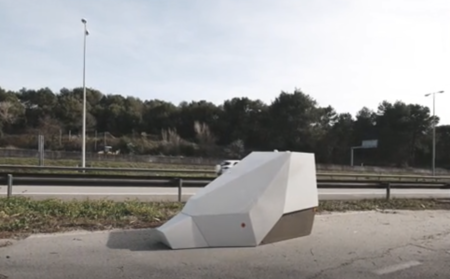
If you spot a metallic, angular, and almost futuristic-looking trailer on the road, you might not immediately think of a speed camera. However, this innovative design, reminiscent of the Tesla Cybertruck, serves a crucial purpose: monitoring speed and automatically penalizing those who exceed it. While we’ve seen this technology in various countries, its impact in Spain is already becoming noteworthy.
A Closer Look at the Poliscan Enforcement Trailer
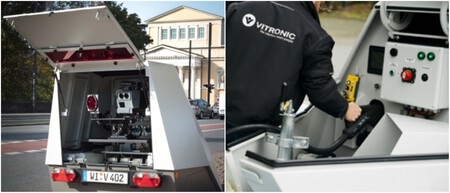
The device colloquially known as the “Cybertruck radar” is officially termed the Poliscan Enforcement Trailer. Manufactured by German company Vitronic, its operation diverges significantly from traditional speed monitoring systems. This mobile speed camera operates autonomously, eliminating the need for constant supervision by law enforcement.
How the Device Operates
The Poliscan Enforcement Trailer utilizes high-performance batteries, enabling it to function in locations without fixed electrical connections or infrastructure. Once deployed, it precisely monitors speed across multiple lanes and can issue violations without any police presence. To enhance security, this radar system includes protection against sabotage, featuring movement-sensors and protective designs aimed at deterring tampering. Moreover, it can seamlessly integrate into wider disciplinary processes.
The Spanish Context
In Spain, Catalonia was the first region to implement these towed radars. Reports from Infotrànsit indicate that the Servei Català de Trànsit first introduced them into the road network in 2023, with ten operational units already deployed. There are plans to expand this fleet during 2026, particularly targeting high-accident areas such as the AP-7 highway.
The French Precedent
To comprehend the growing prominence of this radar technology, examining its implementation in France is essential. Over the years, France has deployed these systems effectively and with measurable outcomes. In 2022, approximately 340 of these devices made up about 7.5% of the nation’s radars but were responsible for generating over a quarter of about 25.5 million fines issued. This demonstrates a considerable capacity for detecting speed infractions, suggesting that even a limited number of these devices have a substantial impact.

Transforming Speed Control
These advanced speed radars signify a paradigm shift in speed control methodologies on our roads. The Servei Català de Trànsit and the DGT are increasingly focusing on high-risk areas, such as roads prone to accidents or construction zones where signage may be inconsistent. The towed radars serve as a flexible tool, adaptable to various circumstances, enhancing road safety while streamlining enforcement processes.
Images | Vitronic | Catalan Transit Service