
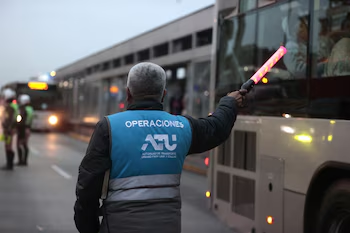
In a significant move to enhance urban transportation in Lima and Callao, the Peruvian government has enacted the Supreme Decree No. 009-2026-MTC, which redefines the Subsidy Policy for the Integrated Urban Transportation System. This decree empowers the Urban Transportation Authority for Lima and Callao (ATU) to negotiate contracts and establish the framework for subsidies more autonomously, aimed at improving service quality and sustainability.
Greater Powers for the ATU
The updated policy greatly enhances the ATU’s ability to negotiate and modify concession contracts within the transportation network’s supplementary corridors. This includes modifying rates, adjusting financial parameters, and defining subsidy mechanisms to ensure service continuity, even during adverse operating conditions.
This legislative update formalizes the ATU’s intervention in the contractual relations with transportation operators, granting it an active and decisive role in managing subsidies and accurately identifying who benefits from them.
Understanding Demand and Supply Subsidies
Two primary types of subsidies have been established under the updated policy. The demand subsidy is designed for public transportation users classified as economically vulnerable. This subsidy may manifest as monetary transfers, vouchers, or preloaded cards, intended to cover the ticket costs either partially or entirely.
The supply subsidy, however, targets system operators. It applies when existing ticket prices are insufficient to meet operating costs. In those scenarios, the state may provide direct financial assistance to ensure service viability while also maintaining oversight to withdraw support when operations stabilize and become efficient.
Focus on Transparency and Inclusion
With the policy update comes an intensified demand for transparency and effective control measures. The ATU is mandated to maintain and regularly update a registry of beneficiaries for demand subsidies, ensuring information validation and preventing leaks.
Additionally, the authority is required to publish annual technical reports detailing actions taken, funds allocated, and outcomes due to subsidy measures. Such measures aim to ensure accountability and transparent use of public resources.
Moreover, the updated framework prioritizes inclusive mobility, particularly for individuals with disabilities, senior citizens, students, and low-income users, to guarantee equitable access to public transportation for all citizens.