
Government’s Offensive on Abortion Rights in Public Healthcare
The Spanish government is advancing a proposal to amend Article 43 of the Constitution to safeguard the right to voluntary termination of pregnancy (IVE) across the nation. This initiative aims to ensure equality in access to abortion services and to highlight the importance of public health provisions. According to Equality Minister Ana Redondo, this effort is crucial because the “scope of public health services is at risk.”
Context and Justification for Constitutional Protection
Redondo clarified that the proposed amendment would not jeopardize the fundamental rights of individual freedom. Instead, it is designed to reinforce the dignity and autonomy of women in relation to their reproductive rights. Furthermore, Mónica García, the Minister of Health, emphasized that constitutional protection for abortion will grant women increased control over their own bodies, lives, and choices. She asserted the need for “accessible, safe, equitable, and free” abortion services within public healthcare everywhere in Spain.
Current State of Abortion Services
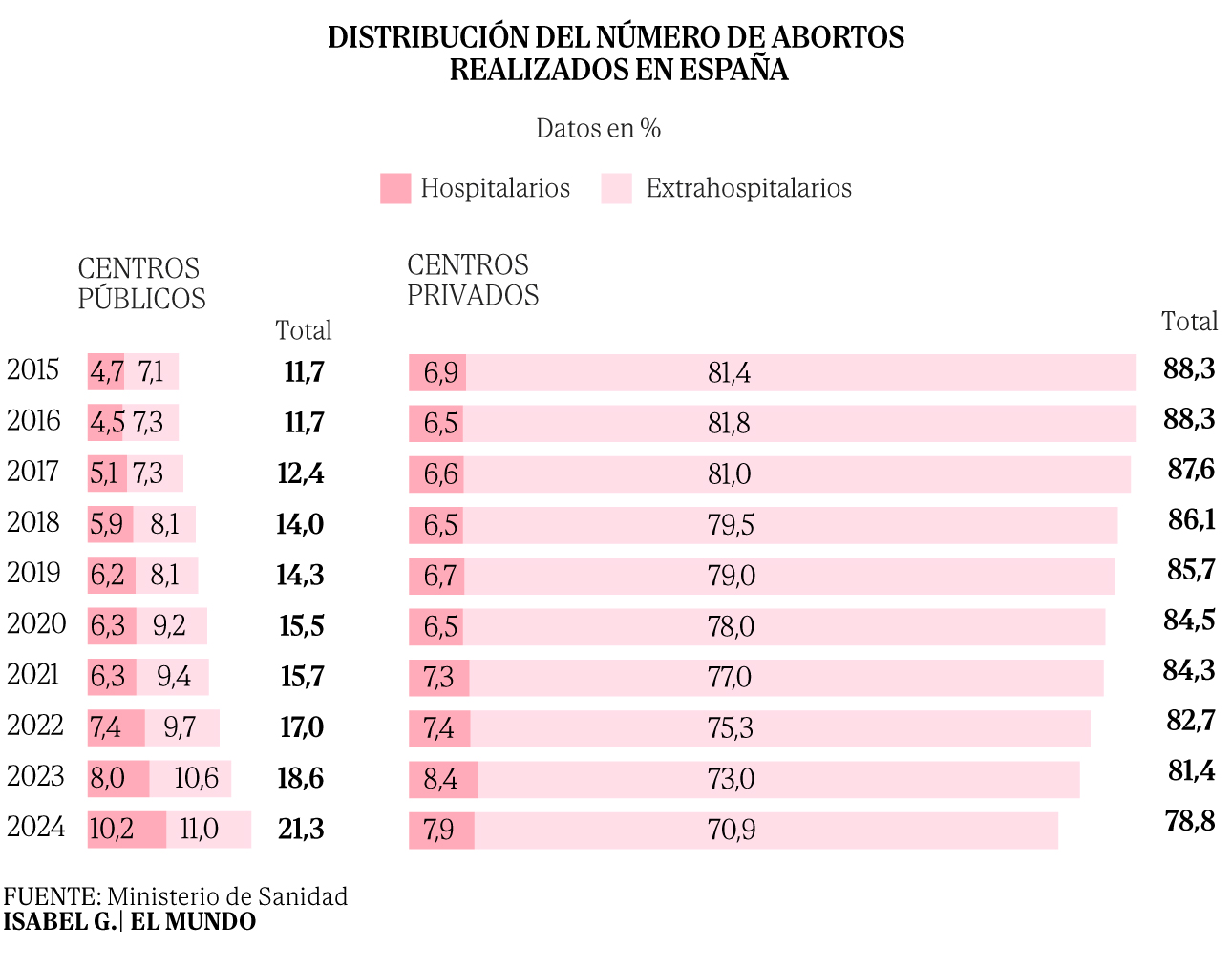
There has been a notable push from the government to increase the prevalence of abortion services within the public healthcare system. Currently, data shows a stark contrast between public and private service usage: 78.74% of abortions are performed in private facilities compared to just 21.25% in public healthcare settings. Over the past decade, in cities like Madrid, only 177 out of 162,000 recorded voluntary terminations occurred in public hospitals, illustrating a significant gap that the government aims to address.
Regional Variations in Abortion Access
Abortion service accessibility varies significantly across autonomous communities. As of 2024, locations such as Cantabria (88.5%), Galicia (77%), and La Rioja (76.1%) have over 60% of abortions conducted publicly. Conversely, some regions, including Andalusia (0.2%) and Madrid (0.47%), report startlingly low figures. It’s noteworthy that while many women are informed about their options through public healthcare facilities, the actual number of procedures performed remains highly inconsistent.
Emphasizing Public Over Private Healthcare
The Minister of Health has pointed to the advantages of using pharmacological methods for abortions, which are less invasive and safer compared to surgical options. Regions with a higher share of public abortions, like Cantabria and Galicia, predominantly utilize these methods, while areas favoring private services tend to resort to surgical procedures.
García warns that maintaining the current level of abortion services outside the public healthcare framework could lead to a “double privatization,” which disassociates abortion from universal public health. This situation could reinforce stigma and hinder access, contradicting the universal principles of Spain’s healthcare system.
Addressing the Conscience Clause
Another contentious issue is the conscience clause impacting healthcare providers. Authorities in Madrid have recently implemented a registry of healthcare professionals who object to performing abortions, complying with a ruling from the Madrid High Court. This registry is seen as necessary for ensuring compliance with current healthcare laws.
In summary, the Spanish government’s initiatives signify a robust commitment to securing and standardizing abortion access within public healthcare. By proposing constitutional amendments and tackling existing disparities, officials aim to foster an environment where reproductive rights are upheld universally across the nation.