
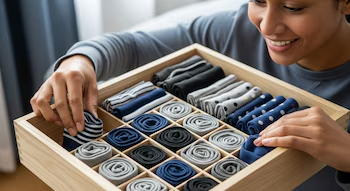
Understanding the Category Organization Method
Gathering objects by category can significantly change how you tackle clutter at home. Experts like Rachael Fahncke, a professional organizer, and Tyler Moore, an organization author, highlight that this methodology makes it easier to visualize the actual number of items you possess, enabling clearer decisions on what to retain.
The Benefits of Sorting by Category
Sorting your home by categories—rather than individual rooms—paves the way for identifying product accumulation and preventing repetitive purchases. According to TIME, consolidating similar items such as chargers or cleaning products often reveals surprising quantities, aiding in both decluttering and organization.
This approach allows you to spot duplicates and make informed decisions about what to keep, which is instrumental in avoiding unnecessary acquisitions while making living spaces more functional.
Understanding Accumulation
Moore notes the transformative impact of grouping similar objects together. The sheer volume often exposes redundancies, enhancing your ability to make clear-cut decisions on what items are truly needed.
For example, Fahncke has found that individuals frequently underestimate how many cables they own. Recognizing that you have dozens of similar items can lead to a profound reassessment of what is necessary.
Getting Started with Categorization
Experts recommend starting by dividing categories into smaller sectors—often called microcategories. Items that generally evoke less emotional baggage, like cleaning supplies, chargers, or socks, are ideal for novices.
According to Moore, choose microcategories that can be dealt with in a short timeframe. “Pick something you can finish in 10 or 15 minutes. Set a timer, complete it, and move on,” he advises.
Practical Examples for Home Organization
This organization method is versatile and suitable for various object types, including footwear, sports apparel, and cleaning products. For maintaining shoes, Fahncke suggests organizing them based on the areas of the home, identifying duplicates, and ensuring that you retain only your favorites.
For cleaning supplies scattered throughout your home, consolidating them helps you determine how many you have and if they can be simplified into one designated area.
The Long-term Benefits of Category Sorting
This categorization method provides more than just visual organization; it streamlines decision-making and daily tasks. Fahncke emphasizes that placing each item within a defined category and a designated spot makes routines more efficient. “You’ll avoid decision fatigue when you know exactly where to find items,” she explains.
Having such a system enables you to impose limits on new acquisitions. Once you determine how much you want of each item type, it becomes easier to control incoming goods, preventing unnecessary clutter from reoccurring.
By recalibrating where you keep frequently used items—such as placing cleaning supplies in a single container or positioning essential products closer to their usage point—you adapt your home environment to your lifestyle needs.
Ultimately, an organized home not only promotes cleanliness but also supports a peace of mind, providing a better quality of life.